
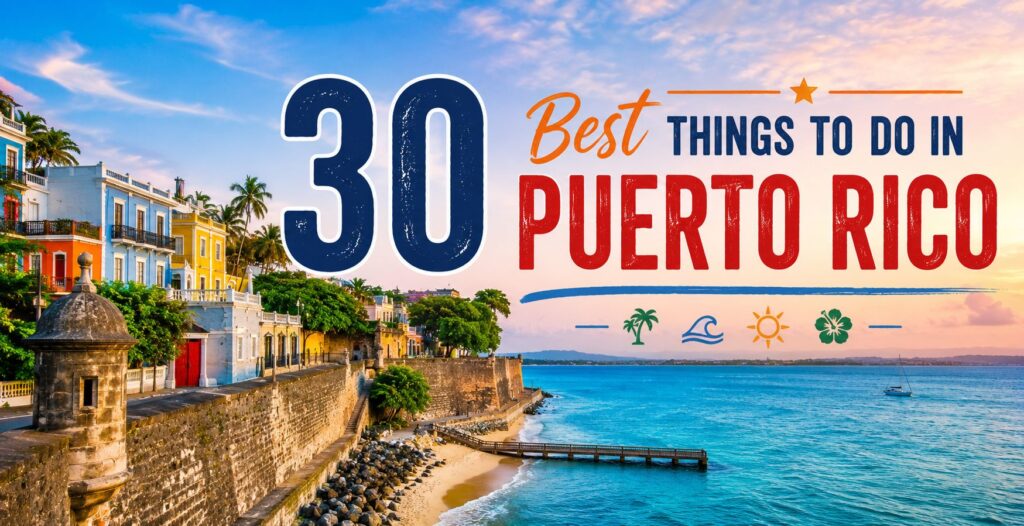
Puerto Rico is the only US territory that is entirely tropical. The only tropical rainforest in the US National Forest System is here, in El Yunque, 40 miles east of San Juan. The bioluminescent bay on Vieques Island is the brightest in the world, holding a Guinness World Record for luminosity. The fortifications of Old San Juan are the largest military construction in the Western Hemisphere. US citizens need no passport to visit any of it. But the case for Puerto Rico begins, not ends, with that passport convenience because the island would justify a passport and a 10-hour flight if it required one, and it does not.
Old San Juan, the seven-block colonial grid on a promontory jutting into the Atlantic, has been continuously inhabited since 1521 and is the oldest European settlement under the US flag. The blue cobblestones that pave every street in the old city were brought from Spain as ships’ ballast. The same stones have been here for 400 years. The mofongo mashed plantain with pork crackling and garlic, served in every restaurant on the island in variants ranging from a $6 street plate to a $40 presentation at a San Juan restaurant is the most specifically Puerto Rican dish in a food culture that is as distinct from American cooking as any regional cuisine in the Caribbean. The surfing at Rincón on the northwest coast draws professional surfers from every country. The lechón (slow-roasted whole pig) along La Ruta de Lechón in Guavate is the finest single food experience in the Caribbean.
This guide covers the 30 best things to do in puerto rico organized by area, from Old San Juan’s fortifications to Flamenco Beach on Culebra to the bioluminescent water of Vieques. It is written for US visitors (no passport required, US dollars, direct flights from most major US cities) and international visitors alike, and covers every budget from the completely free to the finest the island offers. For more Caribbean and US destination guides, read our complete guide to things to do in Key West and our full planning resource at best travel destinations in the world.
Puerto Rico At a Glance: Quick Reference Table
| Activity | Location | Entry | Duration | Best For | Best Time |
|---|---|---|---|---|---|
| Old San Juan Walking Tour | Old San Juan | Free | 2 to 3 hours | Colonial architecture, blue cobblestones, Caribbean history | Morning |
| Castillo San Felipe del Morro (El Morro) | Old San Juan | $10 | 1.5 to 2 hours | Largest fortification in Western Hemisphere, Atlantic views | Morning |
| Castillo San Cristóbal | Old San Juan | $10 | 1 to 1.5 hours | Urban defensive fort, tunnels, city views | Any time |
| La Fortaleza (Governor’s Mansion) | Old San Juan | Free exterior | 30 mins | Oldest executive mansion in the Western Hemisphere | Any time |
| Old San Juan Sunset from La Muralla | Old San Juan | Free | 1 hour | Finest sunset view in San Juan | 30 mins before sunset |
| Condado Beach | Condado, San Juan | Free | Half day | Closest beach to Old San Juan, calm water | Morning |
| Luquillo Beach | Luquillo, east coast | Free | Half day | Most beautiful palm-lined beach near San Juan, kiosks | Morning |
| Playa Flamenco, Culebra | Culebra Island | Free | Full day | Consistently ranked best beach in Caribbean | Any time |
| Playa Crash Boat | Aguadilla, west | Free | Half day | Finest mainland beach for families and snorkeling | Morning |
| Playa Sucia (La Playuela) | Cabo Rojo, southwest | Free | Half day | Most remote and most spectacular beach | Morning |
| El Yunque National Forest | Luquillo, east | $2 timed entry | Half to full day | Only tropical rainforest in US National Forest System | Morning |
| Mosquito Bay Bioluminescent Tour | Vieques Island | $30 to $50 | 2 hours | World’s brightest bioluminescent bay, Guinness Record | Night, calm weather |
| La Parguera Bioluminescent Bay | Lajas, southwest | $10 to $15 | 2 hours | Mainland bioluminescent bay, boat or kayak | Night |
| Camuy River Cave Park | Camuy, northwest | $12 to $18 | 1.5 to 2 hours | Second-largest underground river in world | Any time |
| Mofongo at La Casita Blanca | Santurce, San Juan | $8 to $18 | Lunch or dinner | Most authentic mofongo in San Juan | Lunch |
| Lechón on La Ruta de Lechón | Guavate, central | $10 to $20 | Lunch | Best whole-roasted pig in the Caribbean | Sunday lunch |
| Bacardi Rum Distillery Tour | Cataño, San Juan area | $14 to $24 | 1 to 2 hours | World’s largest rum producer, cocktail masterclass | Any time |
| Hacienda Buena Vista | Ponce area | $14 to $22 | 1.5 hours | 19th-century coffee plantation, mountain landscape | Any time |
| Ponce Pearl of the South | Ponce | Free | Half to full day | Puerto Rico’s second city, finest colonial architecture | Any time |
| Museo de Arte de Ponce | Ponce | $10 to $14 | 1.5 hours | Finest art museum in the Caribbean | Any time |
| Culebra Island Day Trip | Culebra (ferry from Fajardo) | Ferry $4.50 each way | Full day | Best beaches + snorkeling, wildlife refuge | Any time |
| Vieques Island | Vieques (ferry from Ceiba) | Ferry $4.50 each way | Full day or overnight | Bioluminescent bay + Playa Caracas beach | Any time |
| Rincón Surfing and West Coast | Rincón, northwest | Free (beaches) | 2+ days | Puerto Rico’s surfing capital, December to March waves | Winter for surf |
| Toro Verde Adventure Park | Orocovis, central | $35 to $120 | Half day | Longest zip line in Western Hemisphere | Any time |
| Snorkeling at Luis Peña Channel | Culebra | $25 to $45 | 2 to 3 hours | Finest snorkeling in Puerto Rico, sea turtles | Morning |
| Casa Blanca Museum | Old San Juan | $3 | 45 minutes | Oldest continuously occupied house in Western Hemisphere | Any time |
| Arecibo Telescope Site | Arecibo, northwest | $12 | 1 hour | Former world’s largest telescope, science history | Any time |
| Bosque Estatal de Guánica | Guánica, southwest | Free | 1 to 2 hours | UNESCO Biosphere Reserve, dry tropical forest | Morning |
| Manatee Reserve, Humacao | Humacao, east | Free | 1 hour | Wild manatees, nature reserve | Morning |
| San Juan Food Tour | Old San Juan / Santurce | $60 to $85 | 3 hours | Puerto Rican food culture, rum, local neighborhoods | Evening |
Old San Juan The Colonial Heart of Puerto Rico
Old San Juan occupies the western tip of an islet separated from the Puerto Rico mainland by a channel. The grid of seven blocks is bordered on three sides by the Atlantic Ocean and San Juan Bay, with the 400-year-old city walls (La Muralla) running the full perimeter. Everything within the walls the blue-cobbled streets, the pastel colonial buildings, the Castillo San Felipe del Morro on the northwestern point has been in continuous use since the mid-16th century. Walking Old San Juan is the experience of walking through the oldest surviving European urban fabric under the American flag.
1. Old San Juan Walking Tour
Location: Old San Juan | Entry: Free | Duration: 2 to 3 hours | Best time: Weekday morning
Old San Juan’s seven-block colonial grid, paved with adoquines blue-grey igneous rock tiles quarried from volcanic stone and brought from Spain as ships’ ballast in the 16th century is the most intact example of Spanish colonial urban planning in the United States and one of the finest in the Caribbean. The combination of the pastel painted 16th to 18th-century buildings, the blue cobblestone streets, the fortification walls visible at multiple angles, the bougainvillea covering the balconies, and the specific Atlantic light that hits the city from the north creates a visual environment unlike any other US city or territory.
I have walked this route three times and each time the walk from Plaza de Armas in the center of the old city north to El Morro, west along La Muralla (the city wall), south through Calle Cristo to the Paseo de la Princesa, and east back to Plaza de Colón covers the major architectural landmarks in approximately 2.5 hours without rushing.
Practical tips:
- The blue adoquines get slippery when wet and are genuinely uneven after 400 years of foot traffic. Wear shoes with grip rather than sandals for an Old San Juan walking day
- The best single balcony view of the blue cobblestones: the steps in front of the Catedral de San Juan Bautista on Calle del Cristo, looking north toward the fort walls, in the morning light before 9 AM
- The Instituto de Cultura Puertorriqueña at 98 Calle Norzagaray has free exhibitions on Puerto Rican art and culture and is the finest free cultural institution in Old San Juan
2. Castillo San Felipe del Morro (El Morro)
Location: Old San Juan, northwest point | Entry: $10 | Duration: 1.5 to 2 hours | Best time: Morning
Castillo San Felipe del Morro, the 140-foot-high fortification built on the northwestern tip of Old San Juan between 1539 and 1786, is the largest and most historically significant military fortification in the Western Hemisphere and one of the finest examples of Spanish colonial military architecture anywhere in the Americas. The fort defended San Juan harbor from British, Dutch, and pirate attacks for over 300 years, withstanding attacks by Francis Drake in 1595 and George Clifford in 1598. The six levels of the fortification descend from the main battery at the top to the water battery at sea level, with tunnels, sentry boxes (garitas), and magazines between them.
The view from the top level of El Morro north over the Atlantic, east over the Old San Juan skyline and the San Juan Bay, west toward the open ocean is the finest single viewpoint in Puerto Rico.
Practical tips:
- El Morro and Castillo San Cristóbal are both operated by the National Park Service under the San Juan National Historic Site. A $10 fee covers both forts for 7 days
- The iconic sentry boxes (garitas) at the corners of El Morro have appeared on the Puerto Rico quarter and are the single most photographed element of the fortification. The garita at the northwest corner, with the Atlantic directly below, is the most dramatic
- The National Park Service ranger presentations inside the fort, scheduled daily, are the finest historical interpretation of Old San Juan’s military history available on the island
3. Castillo San Cristóbal
Location: Old San Juan, northeast | Entry: $10 (combined with El Morro) | Duration: 1 to 1.5 hours | Best time: Any time
Castillo San Cristóbal, the 27-acre fortification built between 1634 and 1771 to defend Old San Juan’s landward approach, is the larger of the two Old San Juan forts by area and the more complex architecturally. San Cristóbal’s system of interlocking defensive walls, dry moats, tunnels, and independent redoubts was designed on the principle that each section could be defended independently after other sections fell the most sophisticated military engineering strategy applied to any fortification in the 18th-century Americas. The tunnel system, illuminated for self-guided exploration, is the most atmospheric interior space in any Puerto Rico historic site.
Practical tips:
- The tunnel system beneath San Cristóbal is the finest interior exploration in Old San Juan. Bring a flashlight or use the phone light in the darker sections
- San Cristóbal is at the east end of Old San Juan, 10 minutes’ walk from El Morro along the city walls. Walk the full length of La Muralla between the two forts the view of Old San Juan’s rooftops and the ocean below is the finest uninterrupted coastal walk in the city
- The fort offers the best elevated views of the metropolitan San Juan area. The observation platforms facing east show the full expanse of the Condado tourism district
4. Old San Juan Sunset from La Muralla
Location: The city wall, Old San Juan | Entry: Free | Duration: 1 hour | Best time: 30 minutes before sunset
La Muralla, the 400-year-old city wall running the north and west perimeter of Old San Juan, provides the finest free sunset viewing location in Puerto Rico. The western wall section between El Morro and the Paseo de la Princesa faces directly into the setting sun over the Atlantic, with the fortification’s cannon emplacements providing natural seating. The sunset from La Muralla the light turning the Atlantic copper, the Old San Juan rooftops behind, the distant Culebra Island visible on clear evenings is the most specifically Puerto Rican version of the Caribbean sunset available without a boat.
Practical tips:
- The Ballajá Barracks at the north end of Old San Juan has a roof terrace that provides sunset views without the wall walk, accessible through the Museo de las Américas
- The La Rogativa sculpture on the north wall, commemorating a 1797 procession that (according to tradition) frightened off a British naval blockade by making the enemy think the city was receiving military reinforcements, is the finest single piece of public sculpture in Old San Juan
- The sunset walk along the entire western wall from El Morro to the Paseo de la Princesa takes 45 minutes and is the finest free hour available in Old San Juan
Puerto Rico Beaches
Puerto Rico has 270 miles of coastline and over 300 beaches. The range in character runs from the urban resort strip of Condado in San Juan to the remote coral-sand coves of Cabo Rojo in the southwest. The finest beaches in Puerto Rico are generally not the closest to San Juan the further from the capital, the less developed the beach. The finest beach experience requires either a day trip or an overnight stay on Culebra Island.
5. Playa Flamenco, Culebra Island
Location: Culebra Island, 17 miles east of Puerto Rico | Entry: Free | Ferry: $4.50 from Ceiba | Duration: Full day | Best time: Any time, best May to November for crowds
Playa Flamenco on Culebra Island, the horseshoe-shaped beach of fine white sand and clear turquoise water at the north end of the island, is ranked by multiple international sources as the most beautiful beach in the Caribbean and is consistently cited among the finest beaches in the world. The specific combination of fine white silica sand (not coral, which packs and gets uncomfortable), consistent turquoise water clarity, the circular bay geometry that protects from wave action, and the relatively limited development on the surrounding hillsides creates the most visually complete beach environment accessible from Puerto Rico. There are no hotels on Playa Flamenco. There are food kiosks, camping, and the beach.
Practical tips:
- The ferry from Ceiba (on the east coast of the Puerto Rico mainland) to Culebra departs at 9 AM and 3 PM daily and costs $4.50 each way. The 60-minute ferry ride arrives at the Dewey town dock, 5 minutes by taxi from Flamenco. Arrive 45 minutes before departure the ferry reaches passenger capacity and does not guarantee boarding without early arrival
- A day trip to Flamenco from San Juan is achievable but long. San Juan to Ceiba ferry terminal by car is 1.5 to 2 hours. The return ferry from Culebra to Ceiba departs at 5 PM. A full day at Flamenco requires an early start from San Juan
- Overnight at the Flamenco Beach campsite ($20 per person per night, reservations at reservation.pr) for the finest version of Culebra watching the sunrise from the beach before the day-trip crowds arrive
6. El Yunque National Forest and Luquillo Beach
Location: Luquillo, east Puerto Rico (1 hour from San Juan) | Entry: $2 timed entry for El Yunque, beach free | Duration: Half to full day | Best time: Morning for El Yunque**
Luquillo works as a combination day trip from San Juan because El Yunque National Forest and Luquillo Beach are 5 minutes apart. El Yunque is the only tropical rainforest in the US National Forest System a 28,000-acre forest on the slopes of the Sierra de Luquillo mountains, receiving 200 inches of annual rainfall, home to the Puerto Rican parrot (critically endangered, fewer than 100 in the wild), tree frogs called coquís (whose specific call is the unofficial sound of Puerto Rico), and the waterfalls that make El Yunque the most visited natural attraction on the island. La Mina Waterfall, the primary destination within El Yunque, requires a 45-minute round-trip hike on a paved trail.
Luquillo Beach (Balneario La Monserrate), 5 minutes from El Yunque’s main entrance, is the finest mainland beach near San Juan a long stretch of palm-backed sand with calm water, food kiosks (the Luquillo Kiosks along the highway serve the finest frituras in eastern Puerto Rico), and consistent weekend energy.
Practical tips:
- El Yunque requires a timed entry reservation at recreation.gov from April to September. Tickets at $2 per person are available 3 weeks in advance. Book the 7:30 AM entry for the lightest crowds and the finest light on the waterfalls
- The coquí frog, the tiny tree frog whose call “co-KEE” is the sound most associated with Puerto Rico, is audible throughout El Yunque at any hour but most vocal at dawn and dusk. If you do not hear the coquí in El Yunque, you will hear it from the window of your hotel room in San Juan
- La Mina Waterfall trail (1.6 miles round trip, paved) is the most visited trail in El Yunque. The Big Tree Trail to the same waterfall via a different route (1.3 miles) is less crowded and more atmospheric
7. Condado Beach
Location: Condado, San Juan | Entry: Free | Duration: Half day | Best time: Morning
Condado Beach, the urban resort beach running along Ashford Avenue in the Condado district of San Juan, is the most accessible beach from Old San Juan (15 minutes by taxi) and the most convenient for visitors staying in the capital. The beach is urban in character hotels on one side, Atlantic Ocean on the other but the water is warm, the sand is clean, and the specific combination of beach access and immediate proximity to restaurant and nightlife options make Condado the most practical beach for a short San Juan stay without a day trip commitment.
Practical tips:
- The Ocean Park beach, east of Condado near the Parque Barbosa, is the local’s alternative to Condado less tourist infrastructure, better for swimming, populated primarily by San Juan residents on weekends
- The kite surfing culture at Ocean Park beach (the stretch of sand between Condado and Isla Verde) is the finest accessible spectator sport on the San Juan beaches
- Condado has the finest concentration of San Juan restaurants within walking distance of any beach area. The combination of morning beach, midday restaurant, and evening Old San Juan is the most efficient one-day San Juan experience
8. Playa Sucia (La Playuela)
Location: Cabo Rojo National Wildlife Refuge, southwest Puerto Rico | Entry: Free | Duration: Half day | Best time: Morning**
Playa Sucia, the beach at the southernmost tip of Cabo Rojo municipality within the Cabo Rojo National Wildlife Refuge, is the most remote and most dramatically situated beach on the Puerto Rico mainland. The approach to Playa Sucia passes through the Cabo Rojo salt flats pink and orange salt pans operated since pre-Columbian Taíno times and visible as geometric color fields from the road before ending at a white sand beach backed by the limestone cliffs of El Faro de Los Morrillos lighthouse above. The lighthouse, built in 1882, is visible from the beach and accessible by a short trail. The combination of the pink salt flats, the white beach, the turquoise Caribbean water, and the lighthouse on the cliff is the most visually specific landscape in Puerto Rico.
Practical tips:
- Playa Sucia is 3 miles from the last paved road, accessed by a dirt track. A standard car can make the drive in dry weather. After heavy rain the road can be muddy
- The salt flats are best viewed from the road in the late afternoon light (3 to 5 PM) when the low-angle sun intensifies the pink and orange colors
- Combine Playa Sucia with a La Parguera bioluminescent bay evening tour both are in the southwest and are 30 minutes apart
El Yunque, Bioluminescent Bays, and Puerto Rico Nature
9. Mosquito Bay Bioluminescent Tour Vieques Island
Location: Vieques Island | Cost: $30 to $50 per person | Duration: 2 hours | Best time: New moon nights (no moonlight), calm weather
Mosquito Bay on Vieques Island holds the Guinness World Record as the world’s brightest bioluminescent bay. The luminescence is produced by dinoflagellates single-celled microscopic organisms (Pyrodinium bahamense) that emit blue-green light when disturbed by movement. In Mosquito Bay, the concentration of dinoflagellates is so high that every stroke of a kayak paddle, every movement of a hand through the water, every fish that swims through the bay leaves a trail of cold blue fire. The effect is visible only in darkness. On moonless nights with no cloud cover, the entire bay glows with any disturbance.
The tours operate by kayak (no motorized vessels permitted in the bay to protect the dinoflagellates) and depart from Esperanza town on Vieques.
Practical tips:
- Book the bio bay tour on a new moon night or the nights immediately before and after new moon. The Vieques tour operators publish monthly new moon calendars. The full moon effectively washes out the bioluminescence visibility
- The kayak tour operators (Blue Glow Bio Bay Tours, Abe’s Snorkeling) require booking 2 to 3 weeks ahead in peak season. The tour is the most in-demand experience in Puerto Rico
- Vieques is accessed by ferry from Ceiba (east coast, 1.5 hours from San Juan) at $4.50 or by air with Cape Air from San Juan International ($75 to $120 one way, 15-minute flight)
10. La Parguera Bioluminescent Bay
Location: Lajas, southwest Puerto Rico | Cost: $10 to $15 per person | Duration: 2 hours | Best time: New moon nights
La Parguera, the fishing village on Puerto Rico’s southwest coast, has a bioluminescent bay accessible by motorized pontoon boat from the town dock. La Parguera’s bio bay is significantly less bright than Vieques’s Mosquito Bay but has the advantage of being on the Puerto Rico mainland accessible by car from San Juan in 2 hours and combinable with a southwestern Puerto Rico itinerary that includes Playa Sucia, the Cabo Rojo salt flats, and the Guánica Biosphere Reserve. The boat tours through La Parguera’s mangrove channels, where the dinoflagellates concentrate in the still water, are the most accessible bioluminescent experience for visitors without the time for a Vieques trip.
Practical tips:
- La Parguera boat tours depart from the town dock and run every evening after dark. No advance reservation is typically required for the motorized boat tours
- The La Parguera fishing village has the finest accessible seafood restaurants in southwest Puerto Rico. The fresh fish and lobster at the dockside restaurants, eaten before the night bio bay tour, is the complete La Parguera evening
- Kayak tours are also available in La Parguera and provide a similar experience to Vieques without the Guinness-level brightness
11. Camuy River Cave Park
Location: Camuy, northwest Puerto Rico | Entry: $12 to $18 | Duration: 1.5 to 2 hours | Best time: Any time**
The Camuy River Cave Park at Barrio Palmas in Camuy contains the third-largest underground river system in the world a 268-foot-deep cave chamber through which the Rio Camuy flows beneath the limestone karst landscape of northwest Puerto Rico. The main cave chamber, accessible by tram and then on foot, is large enough to hold a 25-story building inside it, with stalactite formations that have been growing for 45 million years and a river of clear water flowing through the cave floor. The tarantulas that live on the cave walls are the largest cave-dwelling tarantulas in Puerto Rico and are present on most tours.
Practical tips:
- The park is open Thursday to Sunday only, 8 AM to 3 PM. Check the park’s current operating schedule before planning a visit, as closures for maintenance are periodic
- The cave tour is guided and tram-accessed no independent cave exploration. Guides are required by the park regulations
- Wear closed-toe shoes. The cave floor is wet and uneven in sections
Culebra and Vieques Islands
Culebra and Vieques, the two Spanish Virgin Islands located east of the Puerto Rico mainland, are the finest natural destinations accessible from San Juan and together contain the two most compelling reasons to extend a Puerto Rico trip beyond the capital: Flamenco Beach (Culebra) and the Mosquito Bay bioluminescent experience (Vieques). Both islands are accessible by ferry from the Ceiba ferry terminal on the Puerto Rico east coast.
12. Culebra Island Day Trip or Overnight
Ferry from: Ceiba (east coast, 1.5 hours from San Juan) | Ferry cost: $4.50 each way | Duration: Day trip or overnight | Best time: Any time**
Culebra Island, 17 miles east of the Puerto Rico mainland, is the most naturally complete of Puerto Rico’s offshore islands: Flamenco Beach, the finest beach in the Caribbean, is 15 minutes from the ferry dock; the Luis Peña Channel snorkeling, with sea turtles and coral formations in water clear enough to see 60 feet down, is 20 minutes by water taxi; and the island’s small capital Dewey retains the character of a small Caribbean fishing town unmodified by resort development. The entire island has no traffic lights and approximately 1,500 permanent residents. The contrast with metropolitan San Juan 17 miles away is the most extreme available in Puerto Rico.
Practical tips:
- Water taxis from Dewey town dock to Playa Flamenco cost $3 per person and are the most practical transport to the beach. The water taxi operators line up at the dock when the ferry arrives
- Snorkeling tours to Luis Peña Channel (a National Wildlife Refuge) cost $25 to $45 and depart from Dewey. Sea turtle sightings are frequent on Luis Peña tours and are the finest wildlife encounter accessible from Culebra without specialized dive equipment
- For overnight stays, the Tamarindo Estates guesthouse is the most atmospheric accommodation on Culebra and consistently the most praised by visitors choosing an extended island stay
Puerto Rican Food and Drink
Puerto Rican food is the most underappreciated cuisine in the United States. It is built on three principal cooking traditions that coexist and influence each other: the Taíno indigenous tradition (yuca, plantain, corn, annatto), the Spanish colonial tradition (sofrito, escabeche, olives, capers, wine), and the West African tradition brought by enslaved people (pork-fat cooking, plantain preparations, rice-and-bean combinations). The result is a cuisine as specific and as coherent as any regional American food tradition mofongo, pernil, arroz con gandules, pasteles, morcilla, alcapurrias, and bacalaitos are dishes that exist in their authentic form only in Puerto Rico and the Puerto Rican diaspora communities of New York, Florida, and Chicago.
13. Mofongo
Where: La Casita Blanca (Santurce, San Juan), multiple restaurants island-wide | Cost: $8 to $22 | Best time: Lunch or dinner
Mofongo is the dish most specifically associated with Puerto Rican cooking and the one most worth seeking in authentic form. The preparation green plantain mashed with garlic and pork crackling (chicharrón) in a wooden pilón mortar, seasoned with olive oil, formed into a dome and served with broth or a protein on top is the most labor-intensive and most texturally specific preparation in the Puerto Rican kitchen. Every restaurant in Puerto Rico serves some version. The finest versions are in the local restaurants of Santurce and the Río Piedras markets in San Juan, not in the Old San Juan tourist district.
La Casita Blanca at 351 Calle Tapia in Santurce is the most praised traditional Puerto Rican restaurant in San Juan, operating out of a converted house with a fixed daily menu of classic dishes. The mofongo de camarones (with shrimp) is the standard order.
Practical tips:
- La Casita Blanca is cash only. The daily menu is written on a board, not printed. Arrive before noon for the best selection of the day’s dishes the most popular items sell out
- Mofongo in the tourist restaurants of Old San Juan is reliably available but frequently adapted for visitors. La Casita Blanca, Raíces, and Amadeus in Old San Juan offer more authentic versions in tourist-accessible settings
- The plantain used for mofongo is unripe green plantain (plátano verde) starchy, not sweet. The sweet plantain (amarillo) is a different preparation. Order both on the same visit to understand the range
14. Lechón on La Ruta de Lechón
Location: Guavate, central Puerto Rico (45 minutes south of San Juan) | Cost: $10 to $20 | Best time: Sunday from 11 AM
La Ruta de Lechón, the strip of lechoneras (whole-roasted pig restaurants) along Route 184 in Guavate in the central mountains, is the most specifically Puerto Rican food experience available on the island. Lechón asado a whole pig (typically 80 to 100 pounds) placed on a spit over hardwood charcoal for 8 to 12 hours, basted with adobo, rotated by hand until the skin is crackling and caramelized is the food most associated with Puerto Rican celebrations, and La Ruta de Lechón on a Sunday is the collective performance of that tradition at its most complete. The restaurants open when the pigs are ready (approximately 11 AM on Sundays) and close when they run out (typically 2 to 3 PM).
Practical tips:
- Go on Sunday. The Ruta de Lechón operates every day but Sunday is when the full culture of the event is present the families, the live music, the coolers of beer, the tables under the corrugated metal roofs in the mountains
- Order the lechón plate with rice, beans, and tostones. The morcilla (blood sausage) and the pernil (pork shoulder) are the secondary orders worth adding
- Combine the Ruta de Lechón with a drive through the central mountains via Route 52 from San Juan. The elevation change, the mountain coffee farms, and the specific landscape of the island’s interior are the finest driving experience in Puerto Rico
15. Bacardi Rum Distillery Tour
Location: Cataño, 10 minutes by ferry from Old San Juan | Cost: $14 to $24 | Duration: 1 to 2 hours | Best time: Any time
The Bacardi Distillery at Bay View Industrial Park in Cataño, the world’s largest rum producer with a capacity of 100,000 gallons per day, offers the most accessible and most comprehensive rum production tour in Puerto Rico. Bacardi’s history in Puerto Rico begins in 1936, when the company moved production from Cuba following political instability, and the Cataño facility has been the primary production site for the global brand since 1958. The tour covers the production process from fermentation through distillation and aging, ending at the Casa Bacardi visitor center cocktail bar.
Practical tips:
- The ferry from Old San Juan’s Pier 2 to Cataño costs $0.50 each way and takes 10 minutes the most affordable and most scenic way to reach the distillery
- The cocktail masterclass, available as an upgrade at $24, includes a 4-cocktail guided tasting with mixology instruction using Bacardi’s full product range
- Don Q rum, the Puerto Rican brand produced by Destilería Serrallés in Ponce, is the rum that Puerto Ricans drink at home and is considered by many Puerto Rican bartenders to be the superior locally rooted brand. Try both
Beyond San Juan Ponce, Rincón, and the Island Interior
16. Ponce The Pearl of the South
Location: South coast, 90 minutes from San Juan | Entry: Free (city) | Duration: Half to full day | Best time: Any time**
Ponce, Puerto Rico’s second city, is the most architecturally significant city in Puerto Rico after San Juan and the city that most specifically represents the late 19th-century prosperity of the island’s southern sugar-growing region. The Plaza Las Delicias at the center of Ponce contains the Parque de Bombas the iconic red and black 1882 firehouse that is the most photographed building in Puerto Rico after El Morro and the Catedral de Nuestra Señora de Guadalupe, one of the finest 18th-century church interiors on the island. The Ponce Massacre Museum (commemorating the 1937 Nationalist shooting) and the Puerto Rican Pantheon are the most significant historical sites in the city beyond the central plaza.
Practical tips:
- The Ponce Art Museum (Museo de Arte de Ponce), the finest art museum in Puerto Rico with the Luis A. Ferré collection of 4,500 works including major European paintings from the 14th through 20th centuries, is the primary destination in Ponce for art-focused visitors. Entry $10 to $14
- The Hacienda Buena Vista, a restored 19th-century coffee and corn plantation 16 miles north of Ponce, offers guided tours of the water-wheel-powered coffee processing facility. The most atmospheric plantation experience in Puerto Rico
- Ponce’s heat (consistently warmer and drier than San Juan) is significant in summer. Visit in the morning and afternoon, retreat to air conditioning during the 1 to 4 PM peak heat
17. Rincón Puerto Rico’s Surfing Capital
Location: Northwest coast, 2.5 hours from San Juan | Entry: Free (beaches) | Duration: 2+ days | Best time: December to March for surf
Rincón, the municipality at the northwest tip of Puerto Rico where the Atlantic and Caribbean waters meet, has been known since the 1968 World Surfing Championships as the finest surf destination in the Caribbean. The swells that arrive at Rincón’s reef and beach breaks from November through March, driven by North Atlantic winter storms, produce the largest and most consistent surfable waves in the Caribbean and have established a permanent international surf community that has operated on the Rincón coast since the late 1960s. The beaches María’s Beach, Tres Palmas Marine Reserve, Sandy Beach, Domes Beach provide the full range from beginner to expert surf access.
Practical tips:
- December through March is surf season. April through October is flat water and fine for swimming, snorkeling, and diving but not for surfing
- The Tres Palmas Marine Reserve adjacent to Rincón town contains the finest coral reef on the Puerto Rico mainland, accessible by snorkeling. The sea turtle population in Tres Palmas is the highest density on the west coast
- Rincón is a 2.5-hour drive from San Juan. An overnight or weekend stay is significantly better than a day trip the town operates on a rhythm specific to the surf and sunset culture that requires time to settle into
18. Toro Verde Adventure Park
Location: Orocovis, central Puerto Rico | Cost: $35 to $120 depending on activity | Duration: Half day | Best time: Any time**
Toro Verde Nature Adventure Park in Orocovis, in the mountains of central Puerto Rico, operates the longest zip line in the Western Hemisphere “The Monster” a 2.5-kilometer cable that descends 610 meters through the mountain landscape of the central cordillera. The Monster’s 4-minute flight from launch to landing delivers views of the central mountain range, the southern coastal plain, and on clear days the Caribbean Sea 15 miles south. The park also operates additional zip lines for various experience levels, suspension bridges, and rappelling stations.
Practical tips:
- The Monster zip line has a minimum weight of 70 lbs and maximum of 250 lbs. Book online at toroverde.com the Monster sells out in advance on weekends
- The combination package at $120 includes the Monster plus several shorter zip lines and provides the full range of the park’s elevation changes
- The drive from San Juan to Toro Verde (1.5 hours via Route 52 and Route 155) passes through the central mountains’ coffee-growing landscape and the Jayuya mountain town, the finest driving scenery accessible from San Juan without an overnight stay
Puerto Rico Practical Guide
Getting to Puerto Rico
From the United States: US citizens require no passport for Puerto Rico. A state ID, driver’s license, or US passport all work for identification on domestic flights from the continental US to San Juan. San Juan’s Luis Muñoz Marín International Airport (SJU) receives direct flights from New York, Miami, Philadelphia, Boston, Atlanta, Orlando, Chicago, Houston, and most major US cities. Flight time from New York: 3.5 hours. From Miami: 2.5 hours. From Los Angeles: 6 hours.
From international origins: International visitors to Puerto Rico require a valid passport and, if required, a US visa. Puerto Rico operates under US immigration and customs rules. Arrivals from international origins clear US customs and immigration at SJU.
Currency: Puerto Rico uses US dollars. No currency exchange is required for US visitors. Credit cards are accepted at virtually all hotels and most restaurants. Cash is preferred at many smaller lechoneras, roadside food stalls, and local comedores.
Getting Around Puerto Rico
Car rental: Puerto Rico requires a car for destinations outside San Juan. The road system is comprehensive but conditions vary mountain roads require patience and a vehicle with adequate clearance. Car rental at SJU airport averages $40 to $80 per day. Book in advance, especially for holiday periods when local demand is high.
Public transit in San Juan: The Tren Urbano (urban rail) connects the Santurce and Hato Rey business districts to the Sagrado Corazón station, from which the Covadonga bus reaches the ferry terminal. The system is functional for specific routes but does not cover the tourist areas of Old San Juan or Condado directly. Taxis and rideshare (Uber and local apps) are the primary intra-San Juan transport for visitors.
Ferries to Culebra and Vieques: The ferry terminal is at Ceiba, on the east coast 1.5 hours from San Juan. Ferry reservations are available at prtc.pr (Puerto Rico Transportation Corporation). The $4.50 fare is the same for passengers on day trips and overnight visitors. Arrive 30 to 45 minutes before departure capacity is limited.
AMA Buses: The Metropolitan Bus Authority operates fixed-route buses throughout the San Juan metropolitan area for $0.75 per ride. Practical for specific routes between Old San Juan, Condado, and Isla Verde.
Puerto Rico Budget Guide
All prices in US dollars Puerto Rico uses USD, no exchange required for US visitors.
Budget traveler (guesthouse or Airbnb, comedor food, local beaches, free sites): $80 to $120 per day. The free attractions in Puerto Rico include El Morro and San Cristóbal exterior (the interior requires the $10 NPS pass), all beaches, La Muralla sunset walk, the Old San Juan architectural walk, and the bio bay on La Parguera (if arriving by own vehicle to Lajas). A comedor (small local restaurant) lunch costs $8 to $12. Rice and beans with pernil from any neighborhood cafeteria costs $7. Guesthouses in Santurce average $50 to $80 per night.
Mid-range traveler (hotel, restaurant meals, paid activities): $160 to $250 per day. The $10 NPS pass for El Morro and San Cristóbal, El Yunque timed entry ($2), the Mosquito Bay kayak tour ($40), a day trip to Culebra including ferry and water taxi ($20), and an evening at La Casita Blanca ($15 to $20) cover the essential Puerto Rico experience without a resort hotel. Hotels in Condado average $120 to $200 per night.
Luxury traveler (resort hotel, fine dining, private charter): $350 and above per day. The El San Juan Hotel in Isla Verde and the Caribe Hilton on the Condado beachfront are the finest classic resort experiences in Puerto Rico. La Factoria cocktail bar in Old San Juan (consistently rated among the finest cocktail bars in the world) and Marea at 1919 at the Condado Vanderbilt for fine dining represent the upper end of the San Juan food and drink experience.
Best Time to Visit Puerto Rico
December to April (High Season): The finest weather temperatures average 75 to 85 degrees Fahrenheit with the trade winds keeping the humidity manageable. December and January are the coolest and least humid months. This is peak season for flights and hotels: book 3 to 4 months ahead for holiday periods and January through March.
May to June: The transition period before hurricane season. Temperatures warm, humidity increases, prices drop from peak, and the island is less crowded than the December-April high season. The surf season has ended at Rincón but the beaches and nature activities are fully operational.
July to November (Hurricane Season): Puerto Rico is in the Atlantic hurricane zone, with peak risk in August through October. Hurricane Maria in September 2017 caused catastrophic damage to the island and recovery from which continued for several years afterward. Travel insurance is strongly recommended during hurricane season. Prices during this period are the lowest of the year and availability is excellent outside of storm events.
Frequently Asked Questions About Puerto Rico
Do US citizens need a passport for Puerto Rico? No. Puerto Rico is a US territory. US citizens travel to Puerto Rico with the same identification they use for domestic US flights a valid state driver’s license, state ID, or US passport. No passport is required. US dollars are the currency. No customs or immigration is required for travel between Puerto Rico and the continental United States.
How many days do you need in Puerto Rico? Five days is the ideal minimum for a first visit: 2 days in San Juan and Old San Juan, 1 day in El Yunque and Luquillo, 1 day for a Culebra or Vieques trip, and 1 day for the Ruta de Lechón and central mountains. Seven days adds a western Puerto Rico drive including Rincón, Cabo Rojo, and La Parguera bio bay. Ten days allows the full island including Ponce and an overnight on Vieques for the Mosquito Bay tour.
What is the best time to visit Puerto Rico? December through April for the finest combination of weather, dry conditions, and comfortable temperatures. January and February are the most popular months for US visitors seeking winter warmth and have the highest hotel prices. May through early June offers good weather with lower prices and fewer visitors. Hurricane season is June through November with peak risk August through October.
What is mofongo and where should I eat it? Mofongo is the national dish of Puerto Rico green plantain mashed with garlic and pork crackling in a wooden mortar, served with broth or a protein. It is the most specifically Puerto Rican preparation and the one dish that most clearly demonstrates the Taíno-Spanish-African food synthesis of the island’s cuisine. La Casita Blanca in Santurce and Raíces in Old San Juan are the two most praised accessible options for authentic mofongo in San Juan.
What are fun things to do in puerto rico with kids? El Yunque National Forest with the La Mina waterfall trail is the most compelling family nature experience. The Culebra ferry and Flamenco Beach is the finest family beach day in Puerto Rico. The Camuy River Cave Park is the most dramatically impressive indoor family attraction. The Toro Verde zip lines have family options for children above the minimum weight. The Old San Juan fort interiors at El Morro and San Cristóbal with tunnels, cannon emplacements, and the Atlantic views are the finest family history experience on the island.
What are things to do in san juan puerto rico specifically? Old San Juan contains El Morro and San Cristóbal (the forts), the blue cobblestone streets, La Fortaleza, Casa Blanca, and the sunset from La Muralla. In metro San Juan outside the historic district: the Bacardi Distillery ferry trip, the Museo de Arte de Puerto Rico in Santurce, the La Casita Blanca mofongo experience, the Condado and Ocean Park beaches, and the La Factoria cocktail bar consistently ranked among the world’s best.
Final Word: Puerto Rico Rewards the Visitor Who Goes Beyond San Juan
Most visitors to Puerto Rico spend their entire trip within the radius of Old San Juan and the Condado hotel strip. They see El Morro and the blue cobblestones and the beach outside their hotel and they leave having seen Puerto Rico in the way that visiting Manhattan and concluding you have seen New York is seeing New York. The island is 99 miles long. The Mosquito Bay bioluminescent tour on Vieques is 70 minutes by ferry from the Ceiba dock. The Ruta de Lechón in Guavate is 45 minutes from San Juan on a Sunday morning. Playa Flamenco on Culebra is the best beach in the Caribbean and requires a $4.50 ferry ticket to reach.
Puerto Rico is the destination that exceeds what Americans expect from it. They expect convenience (no passport, dollars, direct flights, familiar fast food). They find that, and they also find the world’s brightest bioluminescent bay, the only tropical rainforest in the US National Forest System, the finest beach in the Caribbean, and a food culture as distinct and as specifically rooted in its geography as any in the world.
Spend one day in Old San Juan. Then go see the rest of it.
For more island and Caribbean-adjacent destination guides, read our complete articles on things to do in Key West, things to do in New Orleans and our full planning resource at best travel destinations in the world.
What surprised you most about Puerto Rico? Tell us in the comments below.

Pingback: 25 Best Things to Do in Aruba 2026 (Local Guide)