
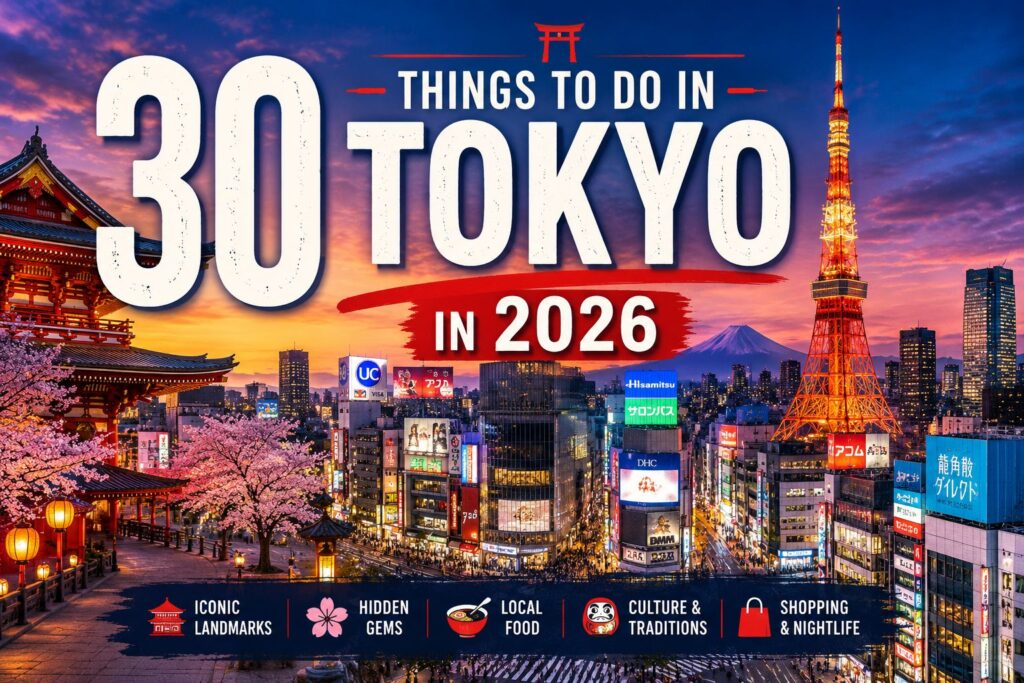
Tokyo is the world’s largest city and, counterintuitively, one of the easiest large cities to navigate as a visitor from any country. The metropolitan area of 37 million people runs on a transit system so precisely timed that a one-minute delay makes the news. The streets are clean without visible surveillance. The food is better at every price point from a ¥900 ($6) bowl of ramen at a counter stool to a ¥30,000 ($200) omakase than in any comparable global city. Tokyo has more Michelin-starred restaurants than Paris. More than New York. More than anywhere. The city that most people associate with ramen and sushi is simultaneously the world’s most Michelin-decorated dining city, and the ramen is also genuinely the best in the world.
The specific quality that surprises visitors most is not the scale though arriving at Shinjuku Station, the world’s busiest with 3.5 million passengers per day, is its own kind of spectacle but the texture of the city beneath the scale. Tokyo is not a single city. It is a constellation of former Edo-period towns that grew together without losing their individual characters. Asakusa feels like historical Japan. Shimokitazawa feels like a small bohemian neighborhood. Yanaka feels like it was left behind by the 20th century in the finest possible way. The Tokyo Tower neighborhood and the teamLab digital art museums and the 24-hour ramen shops and the Tsukiji outer market at 6 AM and the cherry blossom crowds at Shinjuku Gyoen in late March are all happening simultaneously in the same metropolitan area.
This guide covers the 30 best things to do in tokyo organized by neighborhood, written for visitors from every major origin country the United States, Australia, the United Kingdom, Canada, India, and Japan itself. Prices are given primarily in Japanese yen (¥) with approximate USD equivalents. For the full Japan planning guide, read our article on best places to visit in Japan. For more international destination guides, read our best travel destinations in the world.
Tokyo At a Glance: Quick Reference Table
| Activity | Neighborhood | Entry | Duration | Best For | Best Time |
|---|---|---|---|---|---|
| Senso-ji Temple and Nakamise-dori | Asakusa | Free | 1 to 2 hours | Oldest Tokyo temple, historic atmosphere | Early morning (before 8 AM) |
| Shibuya Crossing and Shibuya | Shibuya | Free | 2 to 3 hours | World’s busiest crossing, shopping, energy | Any time, evening for lights |
| Shinjuku Golden Gai and Omoide Yokocho | Shinjuku | Drinks ¥800-1,500 | Evening | Tokyo’s most atmospheric alley bars | Evening, Thursday to Saturday |
| Harajuku Meiji Shrine and Takeshita Street | Harajuku | Free (Meiji) | 2 to 3 hours | Tokyo youth culture, most important shrine | Sunday morning |
| Akihabara Electric Town | Akihabara | Free | 2 to 3 hours | Electronics, anime culture, Japan’s tech district | Any time |
| Meiji Shrine Forest Walk | Harajuku | Free | 45 mins to 1 hour | 70-hectare urban forest, most peaceful Tokyo walk | Morning |
| Shinjuku Gyoen National Garden | Shinjuku | ¥500 ($3.50) | 1.5 to 2 hours | Cherry blossoms, best hanami garden | Late March to early April |
| Ueno Park and Museums | Ueno | Park free, museums vary | Half day | Cherry blossoms, finest museum concentration | Spring |
| Yanaka Old Town Neighborhood | Yanaka | Free | 1.5 to 2 hours | Pre-WWII Tokyo, cemetery, local life | Weekend morning |
| Shimokitazawa | Shimokitazawa | Free | 2 to 3 hours | Vintage shops, live music venues, bohemian | Weekend afternoon |
| Nakameguro Canal | Nakameguro | Free | 1 to 2 hours | Cherry blossoms, finest canal walk | Cherry blossom season |
| Ginza Shopping District | Ginza | Free | 2 to 3 hours | Finest shopping in Tokyo, art galleries | Weekend (car-free Sundays) |
| Roppongi Hills and Mori Art Museum | Roppongi | Museum ¥2,000 | 1.5 to 2 hours | Contemporary art, best Tokyo skyline view | Evening for views |
| teamLab Planets | Toyosu | ¥3,200 ($22) | 1.5 to 2 hours | Most visited digital art museum | Any time, book weeks ahead |
| teamLab Borderless (new location 2024) | Azabudai | ¥3,800 ($26) | 2 to 3 hours | Largest digital art museum in the world | Any time, book ahead |
| Tokyo National Museum | Ueno | ¥1,000 | 2 to 3 hours | World’s largest collection of Japanese art | Any time |
| Ghibli Museum | Mitaka | ¥1,000 ($7) | 1.5 to 2 hours | Studio Ghibli animation, requires advance booking | Any time, book months ahead |
| Edo-Tokyo Museum | Ryogoku | ¥600 | 1.5 to 2 hours | Tokyo history from Edo period | Any time (check renovation) |
| Tsukiji Outer Market Breakfast | Tsukiji | Food ¥500-2,000 | 1 to 2 hours | Finest sushi breakfast in Tokyo | 6 to 9 AM |
| Ramen Ichiran or regional styles | Various | ¥900-1,500 | 30 to 45 mins | Best ramen in the world, solo booth system | Any time |
| Depachika Department Store Basement | Shinjuku or Shibuya | Free to browse | 1 hour | Most extraordinary food retail in the world | Afternoon |
| Izakaya Evening | Various | ¥2,000-5,000 | Evening | Japanese bar-restaurant culture | Evening |
| Tokyo Skytree | Asakusa/Oshiage | ¥2,100-3,400 | 1 to 2 hours | 634m observation tower, finest Tokyo panorama | Clear days, sunset |
| Hamarikyu Gardens | Shiodome | ¥300 | 1 hour | 300-year-old tidal garden, teahouse, city contrast | Any time |
| Odaiba Waterfront | Odaiba | Free | 2 to 3 hours | Bay views, futuristic architecture, teamLab nearby | Sunset |
| Tokyo DisneySea | Urayasu | ¥9,400-10,900 | Full day | Most acclaimed Disney park in the world | Weekday |
| Mount Fuji Day Trip | 100km southwest | JR Pass or ¥4,000 | Full day | Japan’s most iconic landscape | Clear days, any season |
| Nikko Day Trip | 150km north | JR Pass or ¥5,000 | Full day | Ornate Tosho-gu shrine complex, nature | Any time except peak foliage |
| Kamakura Day Trip | 50km south | JR Pass or ¥2,000 | Full day | Great Buddha, temple walk, sea town | Any time |
| Hakone Day Trip | 80km southwest | JR Pass or ¥3,500 | Full day | Mount Fuji views, hot springs, open-air museum | Clear weather |
Iconic Tokyo The Essential First 48 Hours
1. Senso-ji Temple and Asakusa
Neighborhood: Asakusa | Entry: Free | Duration: 1 to 2 hours | Best time: Before 8 AM
Senso-ji, Tokyo’s oldest temple, founded in 628 AD and rebuilt multiple times on the same site, is the most visited religious site in the world with approximately 30 million visitors per year. The approach through the Kaminarimon gate with its massive red lantern, the Nakamise-dori shopping street leading to the inner gate, and the main hall with its incense cauldron create the most specifically Tokyo historical atmosphere accessible in the city. The temple before 8 AM, when the dawn light hits the Kaminarimon lantern and the incense rises through empty air, is one of the finest 30 minutes available in Tokyo at no cost. By 10 AM the approach is packed with tourists from every country. By 7 AM it belongs to the neighborhood.
The Asakusa neighborhood surrounding Senso-ji retains more pre-WWII urban character than almost any other central Tokyo district. The rickshaw operators in traditional dress who work the temple approach in the mornings are genuine this is a working neighborhood, not a historical theme park.
Practical tips:
- The Senso-ji Nakamise-dori shops open at 10 AM. If arriving before 8 AM for the empty temple, the shopping street and the neighborhood’s coffee shops are the activities explore the back streets of Asakusa between the temple and the Sumida River
- The Tokyo Skytree is visible from the Senso-ji grounds and from the Sumida River walk 5 minutes south. Combine both in the same morning
- Asakusa is the terminal station of the Asakusa Line (A-01) and the Ginza Line (G-19). It is also on the Tobu Skytree Line. All accessible with a Suica IC card from any point in central Tokyo
2. Shibuya Crossing and Shibuya
Neighborhood: Shibuya | Entry: Free | Duration: 2 to 3 hours | Best time: Any time; evening for lights
The Shibuya Scramble Crossing the five-way intersection at Shibuya Station’s Hachiko exit where all traffic halts and pedestrians surge in every direction simultaneously is the most recognizable single moment of Tokyo in popular culture and the most efficient demonstration of Japanese urban order available in a single 90-second interval. At peak evening hours, approximately 3,000 people cross the intersection in a single green light cycle. The crossing from above, viewed from the Shibuya Sky observation deck ($18) or from the Starbucks Reserve Roastery window overlooking the intersection, is one of the most visually extraordinary free-ish spectacles in the city.
The Shibuya neighborhood around the crossing the department stores, the independent fashion district of Daikanyama adjacent to the south, the Shibuya Stream development on the river represents contemporary Tokyo’s commercial and cultural vitality at its most concentrated.
Practical tips:
- The crossing from ground level and from above are two different experiences. Do both. The Shibuya Sky observation deck at ¥2,500 provides the definitive aerial view; the Magnet by Shibuya109 rooftop at ¥600 provides a closer ground-level elevated view
- The Hachiko statue at the Hachiko exit the bronze dog waiting for his owner who died in 1925 is the most beloved statue in Tokyo. The story of Hachiko waiting at Shibuya Station for nine years after his owner’s death is taught in every Japanese elementary school
- Daikanyama, 15 minutes’ walk south of Shibuya on the Yamanote equivalent, is the finest bookshop in Tokyo (Daikanyama T-Site Tsutaya), best accessed in combination with a Nakameguro canal walk
3. Shinjuku Golden Gai, Omoide Yokocho, and the Night
Neighborhood: Shinjuku | Entry: Free | Duration: Evening | Best time: Thursday to Saturday from 8 PM
Shinjuku is the largest train station complex in the world (200 exits, 50 platforms) and the surrounding area contains two of the finest small-bar districts in Japan within 10 minutes’ walk of each other. Golden Gai is a grid of six narrow alleyways containing approximately 280 tiny bars, each holding 5 to 8 people, each with a specific theme, clientele, music policy, or character established by a specific owner over decades. The bars include a bar with walls covered entirely in vintage vinyl records, a bar serving only Japanese whisky with a staff of one, a bar that has been open since 1970 with the same owner still serving, and approximately 277 other variations.
Omoide Yokocho (Memory Lane), the narrow alley of yakitori (grilled chicken skewer) stalls under the train tracks west of Shinjuku Station, has been producing smoke and the smell of charcoal-grilled meat since immediately after World War II, when the stalls developed informally in the rubble around the station. Both districts are walkable from each other. Both are free to enter. You pay for what you drink and eat inside.
Practical tips:
- Many Golden Gai bars have a table charge of ¥500 to ¥1,000 per person. This is standard and not a tourist surcharge it is how the economics of an 8-seat bar work. Pay it without discussion
- Some Golden Gai bars have a sign saying “regulars only” or do not accept first-time visitors. This is also standard. Walk to the next bar, which will almost certainly welcome you
- The East Shinjuku Kabukicho entertainment district adjacent to Golden Gai is the largest nightlife district in Asia. It is loud, neon, and fully operational at 3 AM. Walking through it once is worth it for the specific sensory experience of Tokyo at full entertainment intensity
4. Harajuku Meiji Shrine and Takeshita Street
Neighborhood: Harajuku | Entry: Free (Meiji Shrine) | Duration: 2 to 3 hours | Best time: Sunday morning
Meiji Shrine, the Shinto shrine built in 1920 to enshrine Emperor Meiji and Empress Shoken, is set within a 70-hectare forested park of 120,000 trees planted from donations across Japan the largest urban forest in Tokyo and the most dramatically atmospheric shrine approach available in the metropolitan area. The forested path from the Harajuku station torii gate to the inner shrine, through cedar trees that reach over the gravel path, takes 10 minutes to walk and produces the specific silence that forest paths in Japan create by architectural intention. On Sunday mornings, traditional Japanese wedding ceremonies are often conducted at the shrine and are visible to respectful observers.
Takeshita Street, the 350-meter pedestrian shopping street 5 minutes’ walk from Meiji Shrine, is the most internationally famous center of Japanese youth fashion and the most visually specific street in Tokyo for the clothes, food accessories, and aesthetic products that define Harajuku’s cultural identity. The juxtaposition of Meiji Shrine’s ancient forested calm and Takeshita Street’s neon teenage energy, separated by 5 minutes, is a characteristically Tokyo experience.
Practical tips:
- Meiji Shrine is open from sunrise to sunset. Sunday morning before 9 AM is the quietest time and the highest probability of seeing a traditional wedding ceremony in the outer grounds
- Omotesando Avenue, the boulevard between Meiji Shrine and Aoyama, is the finest tree-lined shopping street in Tokyo designer boutiques in buildings by Tadao Ando, Toyo Ito, and SANAA. Walk the full length from Harajuku to Omote-sando station
- The original Harajuku Gyoza-ro restaurant on Omotesando has been serving the same pan-fried gyoza since 1977. The queue is usually 15 to 30 minutes and the gyoza is worth it
5. Akihabara Electric Town
Neighborhood: Akihabara | Entry: Free | Duration: 2 to 3 hours | Best time: Any time
Akihabara, the district east of Ueno that developed into Japan’s largest electronics market after World War II and has since evolved into the global center of anime, manga, and gaming culture, is the most specifically Japanese urban commercial district accessible to visitors. The multi-story buildings stacked floor by floor with electronics components, anime merchandise, vintage game cartridges, audio equipment, manga, and specialist electronics represent a consumer culture that has no equivalent in any other country. The density and specificity of the retail a building with eight floors, each dedicated to a different category of components is genuinely educational about how specialized Japanese commercial culture operates.
Yodobashi Akiba at 1-1 Sotokanda is the largest electronics store in the world, with 10 floors covering every category of consumer electronics, component, and technology product. The tax-free counter on the ground floor serves international visitors purchasing over ¥5,000 in a single transaction.
Practical tips:
- International visitors can claim a 10% consumption tax refund on most purchases over ¥5,000 at Akihabara’s major retailers. Bring your passport. The refund is processed at the tax-free counter immediately
- The Radio Kaikan building at the main Akihabara intersection, eight floors of specialist hobby and model shops, is the finest introduction to the specific character of Akihabara’s shopping beyond the mainstream electronics stores
- Akihabara is on the Yamanote Line (Akihabara station) and the Hibiya Line (Akihabara station). From Ueno, 2 minutes by Yamanote. From Shibuya, 23 minutes
Tokyo Neighborhoods Beyond the Obvious
6. Yanaka Old Town
Neighborhood: Yanaka, between Ueno and Nippori | Entry: Free | Duration: 1.5 to 2 hours | Best time: Weekend morning
Yanaka is the Tokyo neighborhood that survived the great Kanto earthquake of 1923, the WWII firebombing, and the 1960s urban development that eliminated most pre-modern Tokyo, and it looks like it. The wooden machiya townhouses, the independent shops selling handmade pottery and traditional crafts, the narrow lanes, the Yanaka cemetery with its ancient cryptomeria trees, and the specific unhurriedness of a neighborhood that has not been optimized for tourism or commerce make Yanaka the most characterful urban walk in central Tokyo. Yanaka Ginza, the covered shopping street, has been selling the same things from the same families for three generations.
Practical tips:
- Start at Nippori station on the Yamanote Line and walk south through Yanaka Cemetery to Yanaka Ginza. The full walk takes 90 minutes at an unhurried pace
- Kayaba Coffee, the 1938 Yanaka coffee shop that has been serving the same egg sandwich since the Showa era, opens at 8 AM and is the finest morning coffee in the neighborhood
- The Yanaka Cemetery spring cherry blossoms rival Ueno Park at a fraction of the crowd density. The cemetery trees in late March are among the finest quiet cherry blossom experiences in Tokyo
7. Shimokitazawa
Neighborhood: Shimokitazawa, 15 minutes from Shibuya | Entry: Free | Duration: 2 to 3 hours | Best time: Weekend afternoon
Shimokitazawa, the bohemian neighborhood in Setagaya ward west of Shibuya, is Tokyo’s finest vintage clothing and independent live music neighborhood a specific combination of second-hand shops, small theaters, curry restaurants, and coffee shops that has maintained an independent creative character while every comparable neighborhood in every comparable global city has been gentrified out of it. The density of vintage clothing shops in the two blocks north of Shimokitazawa station north exit more per square meter than any neighborhood in Tokyo draws shoppers from across Japan and internationally for specific 1970s and 1980s Japanese and American vintage pieces unavailable anywhere else.
Practical tips:
- Shimokitazawa is on the Odakyu Line from Shinjuku (15 minutes, ¥220) or the Keio Inokashira Line from Shibuya (10 minutes, ¥170). Both are Suica-compatible
- The curry restaurant district in Shimokitazawa Japanese curry shops (Japanese curry is a distinct food category from Indian curry) concentrated in the side streets south of the station is the best accessible Japanese curry experience in Tokyo. Try Spice Cafe for the modern interpretation
- The live music venues in Shimokitazawa (Club Que, Shelter, GARDEN) book emerging Japanese indie artists. The ticket prices are ¥1,500 to ¥3,000 and the quality is frequently very high
8. Nakameguro Canal
Neighborhood: Nakameguro | Entry: Free | Duration: 1 to 2 hours | Best time: Cherry blossom season (late March to early April) or any evening**
Nakameguro, the canal neighborhood running along the Meguro River between Nakameguro station and Daikanyama, is the finest accessible canal walk in Tokyo and during cherry blossom season becomes the most spectacularly photogenic single location in the city. The canal is lined on both sides with 800 cherry trees that bloom simultaneously in late March and early April, their branches meeting overhead to create a tunnel of pink blossoms above the dark water, with the canal restaurants and bars opening their windows below. The evening during cherry blossom season, when the canal is illuminated with lanterns, is the single most beautiful evening available in Tokyo.
Outside cherry blossom season, Nakameguro is a fine dining and design neighborhood. The Nakameguro Starbucks Reserve Roastery on the canal is the finest Starbucks location in the world and worth the visit for the building alone.
Practical tips:
- Cherry blossom timing at Nakameguro canal depends entirely on the spring weather. The Japan Meteorological Corporation publishes precise annual blossom forecasts from February. Book Nakameguro restaurant tables as far in advance as possible for blossom season they fill 4 to 6 weeks ahead
- The Daikanyama T-Site Tsutaya, a 10-minute walk from Nakameguro station, is the finest bookshop in Tokyo and the finest architectural bookshop building in Japan. Worth a full hour
- From Shibuya to Nakameguro: Tokyo Toyoko Line, 3 minutes, ¥160. Walk from Daikanyama to Nakameguro along the canal takes 20 minutes
9. Ginza Shopping District
Neighborhood: Ginza | Entry: Free | Duration: 2 to 3 hours | Best time: Sunday (car-free main street)**
Ginza, the luxury shopping district of central Tokyo centered on Chuo-dori, is simultaneously the finest retail architecture concentration in Japan (flagship buildings by Pritzker Prize-winning architects for Prada, Hermes, Louis Vuitton, and Chanel) and the location of the finest traditional Japanese craft shops, department stores, and galleries in the city. On Sundays from noon to 6 PM, Chuo-dori from Kyobashi to Ginza 6-chome becomes a car-free pedestrian boulevard the finest free urban promenade in Tokyo, with the architecture of the flagship buildings fully visible without the interference of traffic.
The Ginza Six department store is the largest in the Ginza district and the finest depachika (basement food hall) for traditional Japanese confectionery and produce.
Practical tips:
- The Ginza Itoya, the stationery store at 2-7-15 Ginza in operation since 1904, is the finest accessible stationery and paper goods retail experience in Tokyo. 12 floors of Japanese stationery culture
- Mitsukoshi Ginza basement floor is the finest accessible depachika in Ginza for traditional Japanese sweets (wagashi), prepared foods, and high-quality regional Japanese produce
- Ginza is on the Ginza Line (Ginza station G09), the Marunouchi Line (G09), and the Hibiya Line (H07). 7 minutes from Shibuya, 5 minutes from Shinjuku Sanchome by subway
10. Roppongi Hills and the Mori Art Museum
Neighborhood: Roppongi | Entry: Museum ¥2,000 | Duration: 1.5 to 2 hours | Best time: Evening**
Roppongi Hills, the 2003 mixed-use complex designed by Jon Jerde at 6-10-1 Roppongi, contains the Mori Art Museum on the 53rd floor 250 meters above ground, with the finest view of the Tokyo skyline available from any museum in the city and a consistently high-quality contemporary art program. The Tokyo City View observation deck adjacent to the museum at ¥2,000 delivers the full 360-degree Tokyo panorama at the height of the Mori Tower, with Mount Fuji visible on clear days to the southwest and the Tokyo Bay waterfront visible to the southeast. The combination of a strong contemporary exhibition at the Mori Art Museum and the city view at dusk makes Roppongi the finest evening cultural destination in Tokyo.
Practical tips:
- The Mori Art Museum is open until 10 PM (Tuesday until 5 PM only). The 8 to 10 PM slot, when the city lights are fully illuminated and the observation deck crowd has thinned, is the finest version of the visit
- The Louise Bourgeois Maman spider sculpture at the base of the Mori Tower is the most famous permanent public artwork in Roppongi and the most internationally recognized single sculpture in Japan
- The National Art Center Tokyo in Roppongi, 10 minutes’ walk from Roppongi Hills, is the largest exhibition space in Japan and entrance is free (individual exhibitions charge separately). The Kisho Kurokawa-designed building is architecturally significant
Parks, Nature, and Cherry Blossom Season
Cherry blossom season in Tokyo sakura is the most significant annual natural event in Japan and the reason that approximately 376,000 people search for Tokyo and cherry blossoms monthly. The bloom typically occurs from late March to early April, with peak (mankai) generally between March 25 and April 5 in Tokyo. The precise timing varies by up to 10 days depending on winter temperatures. The Japan Meteorological Corporation publishes the annual cherry blossom forecast from early February. Book accommodation for cherry blossom season at least 3 to 4 months ahead.
11. Shinjuku Gyoen National Garden
Neighborhood: Shinjuku | Entry: ¥500 ($3.50) | Duration: 1.5 to 2 hours | Best time: Cherry blossom season, late March to early April
Shinjuku Gyoen, the 58-hectare national garden between Shinjuku and Yotsuya, is the finest cherry blossom viewing location in central Tokyo. The garden contains over 1,000 cherry trees representing 65 different varieties with bloom times staggered across several weeks, meaning the garden has some form of blossom from late February through early May, with peak bloom typically in the last week of March. The staggered varieties mean that the garden has cherry blossoms for 6 weeks while most Tokyo locations have blossoms for 7 to 10 days.
The French formal garden section, the English landscape section, and the Japanese traditional garden section create three distinct experiences within the same grounds, with the greenhouse containing tropical plants as a year-round attraction.
Practical tips:
- Shinjuku Gyoen is closed Mondays and New Year holidays. During cherry blossom season, the gate opens at 9 AM and queues develop from 9:30 AM on weekends. Arrive at gate opening
- Alcohol is not permitted in Shinjuku Gyoen unlike most Tokyo parks where hanami (blossom viewing picnics) involve significant drinking. This policy maintains a quieter and more family-oriented atmosphere than Ueno Park
- The staggered bloom varieties at Shinjuku Gyoen include weeping cherry, Yoshino cherry, and double-flowered varieties. Ask the garden staff which variety is at peak on the day of your visit
12. Meiji Shrine Forest Walk
Neighborhood: Harajuku | Entry: Free | Duration: 45 minutes to 1 hour | Best time: Early morning**
The 70-hectare Meiji Shrine forested park, planted with 120,000 trees from across Japan following the Emperor’s death in 1912 and now fully mature at over 100 years, is the largest urban forest in Tokyo and the most dramatic single natural environment accessible in the city without leaving the metropolitan area. The forested approach path from the main torii gate on the south to the inner shrine takes 10 minutes to walk and creates a complete sensory transition from the noise of Harajuku and Omotesando to the specific silence of old growth forest. No other central Tokyo experience produces this transition in this short a distance.
Practical tips:
- The inner shrine grounds include the Meiji Shrine Iris Garden, which blooms in mid-June with approximately 150 varieties of iris. The iris garden is the finest garden at Meiji Shrine and charges a separate ¥500 entry
- The sake barrel display near the north entrance to the inner shrine (the side facing Yoyogi Park) contains 180 sake barrels donated annually by sake breweries across Japan for the shrine’s ceremonies. The barrels are decorative and symbolic
- Yoyogi Park immediately adjacent to Meiji Shrine is the largest open parkland in Shibuya ward. On Sunday mornings, the park perimeter is occupied by street musicians, dance groups, and performers the finest free outdoor performance culture in Tokyo
13. Ueno Park and Museums
Neighborhood: Ueno | Entry: Park free, museums vary ¥600-1,600 | Duration: Half day | Best time: Cherry blossom season; any time for museums
Ueno Park, the 54-hectare public park in Taito ward, is the most famous cherry blossom viewing location in Tokyo and the most concentrated museum district in Japan. The park contains the Tokyo National Museum, the National Museum of Nature and Science, the National Museum of Western Art (a Le Corbusier building on the UNESCO World Heritage list), the Tokyo Metropolitan Art Museum, Ueno Zoo, and Shinobazu Pond all within a 15-minute walk of each other. During cherry blossom season, the main path through Ueno Park is lined with 800 cherry trees and the hanami (blossom viewing picnic) culture operates at full intensity with sake, portable stoves, and company colleagues from 11 AM to midnight.
Practical tips:
- The Tokyo National Museum collection of Japanese art 110,000 objects covering samurai armor, ukiyo-e woodblock prints, Buddhist sculpture, lacquerware, and ceramics is the largest collection of Japanese cultural property in the world. Allow 2 hours minimum for the main Honkan building
- The National Museum of Western Art’s Le Corbusier building (1959) is one of 17 buildings worldwide on the UNESCO Le Corbusier World Heritage Site list. The building itself is the primary reason to visit even without a special exhibition
- Ueno is the terminus of the Shinkansen (bullet train) from Tohoku and Hokkaido regions and a major hub on the Yamanote, Keihin-Tohoku, Ginza, and Hibiya lines
Museums, Art, and Digital Experiences
14. teamLab Planets Tokyo
Neighborhood: Toyosu | Entry: ¥3,200 ($22) | Duration: 1.5 to 2 hours | Best time: Any time, book 2 to 3 weeks ahead
teamLab Planets in Toyosu, the immersive digital art museum by the Tokyo-based art collective teamLab, is the most visited art museum in Tokyo and one of the most visited in the world. The installation works rooms in which visitors walk barefoot through shallow water reflecting infinite flower fields, or stand inside cascading digital waterfalls, or sit in a room where light responds to their movement create the most specifically contemporary Japanese art experience accessible in the city. The “Planets” concept refers to the specific works installed, each occupying a room scaled to produce maximum immersion.
The separately operated teamLab Borderless in Azabudai Hills (reopened 2024 in a new location after the Odaiba original closed) is the larger installation covering 15,000 square meters, with a different series of works. Both are worth visiting if Tokyo is a primary destination.
Practical tips:
- Book teamLab Planets tickets at least 2 to 3 weeks ahead at teamlabplanets.dmm.com. Tickets for weekend mornings sell out 4 to 6 weeks ahead in busy seasons (spring, summer)
- Bring or wear clothes you do not mind getting wet. The water installations require rolling up trousers. Lockers are available for bags and shoes inside the venue
- The ticket price includes all installations. There is no additional charge for specific rooms. The recommended time inside is 1.5 to 2 hours for the full experience
15. Ghibli Museum
Neighborhood: Mitaka, west Tokyo | Entry: ¥1,000 ($7) | Duration: 1.5 to 2 hours | Best time: Any time, book months ahead from abroad
The Ghibli Museum at Inokashira Park in Mitaka, designed by Studio Ghibli director Hayao Miyazaki as an expression of his creative philosophy in architectural form, is the most in-demand ticketed attraction in Tokyo. The museum covers Studio Ghibli’s animation process through original production materials hand-drawn cels, background paintings, model sheets with specific attention to the handcraft of traditional animation, which Miyazaki considers philosophically essential. The roof garden with the robot soldier from Castle in the Sky and the Catbus room accessible only to children are the most photographed features of a building where photography inside the exhibition rooms is not permitted.
Practical tips:
- Tickets must be reserved at least one month in advance through the Lawson convenience store ticket system (in Japan) or through authorized international booking services. Tickets are not sold at the door. International visitors should book through lawsonticket.com using an international credit card
- The museum admission includes a short original Ghibli film screened in the Saturn Theater, exclusively at the museum and unavailable anywhere else. The film changes periodically
- Mitaka is 30 minutes from Shinjuku on the JR Chuo Line (¥230). The museum shuttle bus from Mitaka station costs ¥320 each way
16. Tokyo National Museum
Neighborhood: Ueno Park | Entry: ¥1,000 | Duration: 2 to 3 hours | Best time: Any time
The Tokyo National Museum at Ueno Park, established in 1872 and operating in its current complex since 1938, is the largest museum in Japan and holds the world’s largest collection of Japanese art over 110,000 objects including samurai armor, Noh theater costumes, Buddhist sculpture, ukiyo-e woodblock prints by Hokusai and Hiroshige, lacquerware, ceramics, and calligraphy. The Honkan main building’s permanent galleries on the second floor represent the most comprehensive and most accessibly organized introduction to Japanese art history available in a single museum visit anywhere in the world.
Practical tips:
- The samurai armor gallery (Room 5) and the ukiyo-e woodblock print gallery (Room 10) are the most internationally recognized sections of the Honkan collection
- The Heiseikan building hosts rotating special exhibitions of national treasure-class objects from across Japan. The special exhibitions ($1,400 to $2,000 yen) are often the finest accessible viewing of specific major Japanese art works in any given year
- The museum garden, open periodically for special teahouse events, is the finest garden in the Ueno Museum complex
Tokyo Food: From ¥900 Ramen to the World’s Most Michelin Stars
Tokyo has 203 Michelin-starred restaurants as of the most recent guide more than Paris, more than New York, more than any city on earth. This is the single most important food fact about Tokyo and the one most visitors do not know before they arrive. The city associated globally with ramen and sushi is simultaneously the world’s most decorated fine dining city. The ramen is also genuinely the best in the world. Both of these things are true simultaneously and this is Tokyo.
17. Tsukiji Outer Market Breakfast
Neighborhood: Tsukiji | Cost: ¥500 to ¥2,000 per item | Duration: 1 to 2 hours | Best time: 6 to 9 AM
The Tsukiji Outer Market, the retail market surrounding the former wholesale fish market site on the Sumida River waterfront, is the finest accessible sushi and seafood breakfast destination in Tokyo. The sushi stalls, tamagoyaki egg vendors, seafood skewer shops, and fresh produce dealers that have operated in the outer market since the inner wholesale market opened in 1935 continue operating at the original site following the inner market’s relocation to Toyosu in 2018. The outer market was never part of the wholesale relocation and continues exactly as before.
The correct Tsukiji breakfast: arrive at 6 AM, find a seat at Daiwa Sushi or Sushi Dai in the outer market (both require a 30-minute to 1-hour queue at opening), eat a 10-piece omakase for ¥4,000 to ¥6,000.
Practical tips:
- Tsukiji Outer Market operates 6 AM to 2 PM, with most of the best stalls closing by noon when their stock is gone. Arrive before 8 AM for the full selection
- The tamagoyaki (Japanese rolled egg omelet) at Marutake Tamago in the outer market is the finest accessible single item in the market at ¥300 per piece sweet, layered, made on a visible griddle
- The Toyosu wholesale market (relocated inner market) offers a free observation walkway above the tuna auction floor on selected weekday mornings. Book at the Toyosu Market website
18. Ramen
Neighborhood: Throughout Tokyo | Cost: ¥900 to ¥1,500 | Best time: Any time, also available 24 hours at many locations
Tokyo ramen is the finest ramen in the world and the most accessible introduction to Japan’s most varied noodle tradition. The main regional styles available in Tokyo include: Tonkotsu (pork bone broth, Fukuoka origin, rich and opaque), Shoyu (soy sauce broth, clear brown, traditional Tokyo style), Miso (fermented soybean paste broth, Hokkaido origin, heartiest flavor), and Shio (salt broth, the lightest and most technically demanding).
Ichiran Ramen, with multiple Tokyo locations and the signature single-booth eating system where each diner sits in a private booth facing a window through which the ramen arrives, is the most internationally recognized chain and genuinely good. Fuunji in Shinjuku is the best accessible tsukemen (dipping noodle) ramen in Tokyo. Kagari Honten in Ginza is the finest chicken-broth ramen in the city.
Practical tips:
- Most Tokyo ramen shops operate a ticket vending machine at the door. Select your ramen type and toppings, insert money, receive a ticket, hand the ticket to the staff when seated. No Japanese required the machines at most tourist-area shops have photographs
- The “kae-dama” system at many Hakata-style tonkotsu ramen shops allows ordering an additional portion of noodles at the end for ¥150 to ¥200 without paying for an additional bowl of broth. Worth knowing
- Ramen shops in Tokyo regularly close mid-afternoon when their daily broth runs out. Noon to 2 PM weekday lunch is the most reliable full-service window at most non-24-hour shops
19. Depachika Department Store Food Halls
Neighborhood: Shinjuku, Shibuya, Ginza | Cost: Free to browse, food from ¥200 | Best time: Afternoon
Depachika (depaato chika = department store basement) are the underground food halls of Tokyo’s major department stores and represent the most extraordinary single category of food retail in the world. Shinjuku Takashimaya’s basement floor alone contains over 60 separate food vendors covering traditional Japanese confectionery (wagashi), imported European chocolates, Japanese regional specialty products, sushi, prepared bento meals, fresh produce, aged beef, and pastries from the finest Japanese and international brands. The concentration of food quality in a single shopping floor is genuinely without equivalent in any other country’s retail culture.
Practical tips:
- Visit Isetan Shinjuku’s depachika for the finest traditional Japanese confectionery selection. Visit Mitsukoshi Ginza for the finest overall presentation. Visit Shibuya Hikarie’s ShinQs basement for the most contemporary food selection
- The prepared bento boxes in Tokyo depachika, typically ¥800 to ¥1,500, represent the finest accessible lunch in any Tokyo neighborhood. Buying from a depachika and eating in the nearest park is one of the finest Tokyo picnic options
- Depachika reach peak activity from 4 to 7 PM daily when office workers shop for dinner. The energy is exceptional. The discounts on prepared foods begin at 8 PM when stores close
20. Izakaya Culture
Neighborhood: Golden Gai (Shinjuku), Yurakucho, Ebisu, Nakameguro | Cost: ¥2,000 to ¥5,000 per person | Best time: Evening**
The izakaya, the Japanese bar-restaurant hybrid where groups gather over shared small plates (yakitori, edamame, karaage fried chicken, gyoza, sashimi) and draft beer, sake, shochu, or highball whisky for 2 to 4 hours, is the primary social eating institution of Japanese working life and the most authentically social dining experience available to visitors. The salaryman izakayas under the Yurakucho train tracks, one minute from Yurakucho station on the Yamanote Line, are the finest accessible izakayas in central Tokyo old, slightly grimy, reliably excellent, and occupied primarily by Tokyo office workers who have been eating here weekly for decades.
Practical tips:
- In an izakaya, you order continuously throughout the meal rather than receiving courses. Start with drinks and edamame, then add dishes as the evening progresses. The total bill builds across the evening
- The highball (whisky and soda) is the standard izakaya drink and typically costs ¥480 to ¥700. Japanese whisky highballs (Suntory Toki or Kakubin) are the specific Tokyo izakaya standard
- “Toriaezu biru” (beer for now) is the conventional opening order that signals to the staff that you are settling in and will order food subsequently
Day Trips from Tokyo
21. Mount Fuji
Travel time: 2 hours from Shinjuku by Romancecar or JR limited express | Cost: ¥4,000 to ¥6,000 return, or JR Pass | Duration: Full day | Best time: Clear days; climbing season July to September
Mount Fuji, the 3,776-meter active volcano 100 km southwest of Tokyo, is the most recognizable natural landmark in Japan and the most visited mountain in the world. The finest accessible views of Mount Fuji from Tokyo are not from the mountain itself but from Lake Kawaguchiko, one of the Fuji Five Lakes, where the reflection of the mountain in still morning water produces the classic “upside-down Fuji” photograph. Lake Kawaguchiko is 90 minutes from Shinjuku by the Fujikyu Highland bus (¥2,000 one way).
For visitors who wish to climb: the official climbing season runs from late June to early September, with huts operational and the official routes open. The Yoshida Trail from the Fuji Subaru Line 5th Station is the most accessible. Climbing takes 5 to 8 hours up and 3 to 5 hours down. The summit is crowded in July and August.
Practical tips:
- The classic Kawaguchiko view of Mount Fuji with cherry blossoms (Chureito Pagoda in mid-April) is the most photographed single image in Japan. Arrive before sunrise for the specific combination of clear air and low crowds. The Fuji-Q bus from Shinjuku runs overnight
- Japan Rail Pass holders can travel to Kawaguchiko on the JR Fujikyuko line from Otsuki. The full Kawaguchiko trip costs approximately ¥4,000 return without a JR Pass
- Mount Fuji is clearest in the morning and in winter. Summer haze frequently obscures the summit from the lake view by 10 AM. Late November to early April delivers the clearest views
22. Kamakura
Travel time: 1 hour from Shinjuku by JR Shönan-Shinjuku Line | Cost: ¥2,000 return, JR Pass valid | Duration: Full day | Best time: Any time except peak August and golden week
Kamakura, the small coastal city 50 km south of Tokyo that served as Japan’s political capital from 1185 to 1333, contains 65 temples and shrines including the Great Buddha of Kamakura the 13.35-meter bronze Buddha visible from the entrance to Kotoku-in Temple and the most immediately recognizable Buddhist sculpture in Japan. The 10-kilometer Kamakura Hiking Trail connecting the major temple complexes through forested ridge trails is the finest accessible half-day hike within reasonable distance of Tokyo, with views of the Pacific coastline and the city’s temple rooftops from the ridge path.
Practical tips:
- The Enoshima Electric Railway (Enoden) connecting Kamakura station to Enoshima Island runs along the Pacific coast for much of its route and is one of the most scenic short railway journeys in the Tokyo region at ¥310
- The Great Buddha at Kotoku-in (¥300 entry) is 15 minutes’ walk from Hase station on the Enoden. The interior of the hollow bronze sculpture can be entered for an additional ¥20
- Kamakura is included in the Tokyo Wide Pass (¥15,000 for 3 days) which also covers the Shinkansen to Nikko and the Romancecar to Hakone
23. Nikko
Travel time: 2 hours from Asakusa by Tobu Limited Express or JR | Cost: ¥5,000 to ¥7,000 return, or JR Pass with Nikko Pass | Duration: Full day | Best time: Spring and autumn foliage
Nikko, the mountain town 150 km north of Tokyo in Tochigi Prefecture, contains the Tosho-gu shrine complex the most ornately decorated Shinto shrine architecture in Japan, built in 1634 to enshrine the first Tokugawa Shogun, Tokugawa Ieyasu, with a density of gilded carving, colored lacquer, and architectural detail that has no equivalent in any other Japanese shrine. The Yomeimon Gate at Tosho-gu, covered in 508 carved relief figures including mythological animals, musicians, flowers, and sages, required 15,000 craftsmen two years to complete and is considered the finest single piece of Japanese decorative architecture.
Practical tips:
- The Tosho-gu shrine complex entry ticket covers most of the major buildings including the ornate stable with the famous “See no evil, hear no evil, speak no evil” monkeys carving. The Sleeping Cat carving and the path to Ieyasu’s mausoleum require a separate ¥520 ticket
- Nikko autumn foliage (mid-October to mid-November) is the most dramatic in the Kanto region and the busiest period. The mountain setting intensifies the fall colors relative to Tokyo-area parks
- The Chuzenji Lake and Kegon Waterfall, 30 minutes by bus from Nikko town, are the finest natural landscape accessible from the shrine complex
Tokyo Practical Guide For Visitors from All Countries
Getting Around Tokyo
IC Card / Suica: The Suica IC card is the most important thing an international visitor acquires in Tokyo. The rechargeable card, available at any major station in Japan, works on every subway line, every JR line, every bus, most convenience stores, vending machines, and many restaurants throughout Tokyo and Japan. Load ¥3,000 to ¥5,000 on arrival. Tap in, tap out. No tickets, no queuing, no calculation required. International visitors can also add their Suica card to Apple Pay or Google Pay before arriving in Japan through the respective apps.
Japan Rail Pass: The Japan Rail Pass (purchased before arrival in Japan, from authorized agents in your country) covers unlimited travel on all JR trains including Shinkansen (bullet trains). For visitors spending 14+ days in Japan and traveling to Kyoto, Osaka, and Hiroshima, the 14-day JR Pass (approximately $400 USD, ¥50,000) is economical. For visitors spending 7 days in Tokyo only, the IC card is sufficient and more cost-effective.
Tokyo Metro Pass: For visitors spending multiple days primarily in central Tokyo, the 72-hour Tokyo Metro pass (¥1,500) covers unlimited travel on the Tokyo Metro and Toei subway lines. Not valid on JR lines (Yamanote Loop, etc.) but covers the majority of tourist destinations within central Tokyo.
Tokyo Budget Guide
Prices in Japanese Yen (¥) with approximate conversions: Currency reference: ¥1,000 ≈ $6.70 USD ≈ $10 AUD ≈ £5.30 GBP ≈ ₹560 INR (exchange rates fluctuate check current rates before travel)
Budget traveler (hostel or capsule hotel, convenience store meals, free attractions): ¥8,000 to ¥15,000 per day ($54 to $100 USD / $82 to $150 AUD / £43 to £80 GBP). Tokyo convenience stores (7-Eleven, FamilyMart, Lawson) sell onigiri rice balls (¥150), prepared bento ($600), sandwiches, and hot foods at prices that make convenience store meals the finest budget food culture in any major world city. A hostel or capsule hotel in central Tokyo costs ¥3,000 to ¥5,000 per night. The free attractions Meiji Shrine, the squares walk, Shibuya Crossing, Yanaka cover days of content.
Mid-range traveler (business hotel, restaurant meals, paid attractions): ¥25,000 to ¥45,000 per day ($170 to $300 USD / $255 to $450 AUD / £135 to £240 GBP). A Shinjuku or Shibuya business hotel (¥10,000 to ¥18,000 per night), teamLab Planets (¥3,200), Senso-ji neighborhood lunch (¥1,500), Skytree (¥2,100), izakaya dinner for two (¥6,000), and transit (¥1,500) covers the essential Tokyo experience.
Luxury traveler (design hotel or ryokan, omakase dining): ¥80,000 and above per day ($540+ USD / $810+ AUD / £425+ GBP). Tokyo’s luxury hotel options include the Park Hyatt Shinjuku (from ¥80,000 per night), the Aman Tokyo (from ¥100,000), and traditional ryokan experiences in the outer wards. A 10-course sushi omakase at a Michelin-starred restaurant costs ¥25,000 to ¥80,000 per person. Tokyo at this level is among the finest luxury travel experiences in the world at any price.
For Visitors from Australia and New Zealand
Flight time: 9 to 10 hours from Sydney/Melbourne, 10.5 hours from Auckland. Tokyo is one of the most popular international destinations for Australian travelers and flights are frequent (Qantas, JAL, ANA, Jetstar). The best Tokyo entry point from Australia is Narita Airport (NRT) or Haneda Airport (HND). Haneda is significantly closer to central Tokyo 30 minutes by monorail versus 60 to 90 minutes from Narita by express train. Australian citizens do not require a visa for stays under 90 days in Japan.
For Visitors from the United Kingdom
Flight time: 12 to 14 hours from London. British Airways and Japan Airlines operate direct London Heathrow to Tokyo Haneda and Narita services. UK citizens do not require a visa for stays under 90 days. The Japan Rail Pass is available from JRailPass and Japan Experience in the UK before travel. The IC card (Suica) can now be added to iPhone UK Apple Pay accounts before departure.
For Visitors from the United States and Canada
Flight time: 12 to 14 hours from West Coast (Los Angeles, San Francisco, Vancouver), 14 to 16 hours from East Coast (New York, Toronto). US and Canadian citizens do not require a visa for stays under 90 days. The Japan Rail Pass is available from authorized US agents including JRailPass and Japan Experience.
For Visitors from India
Visa required: Indian citizens require a Japan tourist visa, obtained from the Japanese Embassy or a VFS Global application center. Processing time is typically 5 to 7 business days. Apply at least 3 weeks before travel. Flight time: 8 to 10 hours from Delhi or Mumbai. Air India, Japan Airlines, ANA, and IndiGo operate routes to Tokyo Narita or Haneda.
Language and Navigation
Tokyo is navigable without Japanese in the main tourist areas. The Yamanote Loop Line stations all have English signage. The Tokyo Metro has English on all signs and platforms. Google Maps works correctly for all Tokyo transit routes. The most useful Japanese phrases for tourists: “Sumimasen” (excuse me), “Arigatou gozaimasu” (thank you), “Kore wo kudasai” (I’ll have this one, with pointing).
Best Time to Visit Tokyo
Late March to early April (Cherry Blossom Season): The most popular and most spectacular season. The combination of comfortable spring temperatures (15 to 22 degrees C / 59 to 72 F) and the cherry blossoms creates the finest Tokyo experience available. Book accommodation 4 to 6 months ahead. Flight prices peak.
October to November (Autumn Foliage): The second-best season. Temperatures drop to comfortable walking range (15 to 22 degrees C). The koyo (autumn foliage) from late October through November turns the city’s parks and the Nikko day trip to deep red and gold. Less crowded than cherry blossom season.
June to August: Hot and humid. July and August regularly reach 35 degrees C (95 F) with high humidity. Indoor attractions teamLab, museums, the depachika work well. Outdoor activities are best before 10 AM or after 6 PM.
December to February: Cold but manageable (average highs 10 to 14 degrees C / 50 to 57 F). The quietest tourist season with the lowest flight prices and hotel rates. Tokyo Disneyland and DisneySea have their finest Christmas and New Year programming in December.
Frequently Asked Questions About Things to Do in Tokyo
How many days do you need in Tokyo? Five days is the minimum for a genuinely comprehensive first visit: Asakusa and Senso-ji plus Akihabara on day one, Shibuya, Nakameguro, and Shimokitazawa on day two, Harajuku, Meiji Shrine, and Shinjuku evening on day three, Ueno museums and Yanaka on day four, teamLab Planets and Odaiba or a day trip on day five. Seven days adds Kamakura, the Ghibli Museum, and a proper izakaya evening in Yurakucho. Ten days allows a Nikko day trip, a Hakone overnight, and the full depth of neighborhoods like Roppongi and Ginza.
Is Tokyo expensive? Tokyo is less expensive than visitors from Australia, the UK, and the United States typically expect. The favorable exchange rate for JPY against USD, AUD, and GBP since 2022 has made Tokyo one of the most affordable major world cities for Western visitors. A budget traveler spending ¥8,000 to ¥12,000 per day ($54 to $80 USD) can eat genuinely well from convenience stores, depachika, and ramen shops while covering the city’s major free attractions. The things that are expensive in Tokyo are the things that are expensive in any world city: Michelin-starred omakase, luxury hotels, and premium sake.
What is the best area to stay in Tokyo? Shinjuku for first-time visitors wanting central access to the Yamanote Line and both east and west Tokyo. Shibuya for visitors focused on Harajuku, Nakameguro, and Shimokitazawa. Asakusa for visitors who want the most atmospheric and most historic Tokyo neighborhood experience. Shinjuku Station area business hotels ($100 to $200 USD per night) offer the best value-to-location ratio in the city.
Do I need to speak Japanese to visit Tokyo? No. Tokyo’s transit system has English on every sign. Google Maps provides accurate transit directions in English for every journey in Tokyo. Most restaurant menus in tourist areas have English or photographs. The most important tool is patience and a willingness to point. Japan’s social code of helpfulness means that asking any staff member for assistance will produce genuine effort to communicate, regardless of English ability.
What is cherry blossom timing in Tokyo? Cherry blossoms in Tokyo typically peak between March 25 and April 5, with the precise timing varying by up to 10 days depending on winter temperatures. The Japan Meteorological Corporation publishes annual bloom forecasts from early February with weekly updates as the season approaches. The finest cherry blossom locations in Tokyo are Shinjuku Gyoen (1,000 trees), Nakameguro Canal (800 trees), Ueno Park (800 trees), Chidorigafuchi moat (200 trees along the water), and Yanaka Cemetery.
What are the best things to do in tokyo japan for a first-time visitor? The essential first visit: Senso-ji at dawn, Shibuya Crossing at evening, Golden Gai for one drink, Meiji Shrine forest walk, Shinjuku Gyoen (or Nakameguro canal in cherry blossom season), teamLab Planets, the Tsukiji Outer Market breakfast, ramen at least twice, the depachika at Isetan or Takashimaya Shinjuku, and a Kamakura day trip. This covers Tokyo’s most significant experiences and provides the specific orientation that turns a first visit into the beginning of a longer relationship with the city.
Final Word: Tokyo Reveals Itself Slowly and Rewards the Patient Visitor
The most consistent thing visitors say about Tokyo is that they did not see enough of it. They spent four days, saw Shibuya and Senso-ji and Shinjuku and teamLab, and left with the feeling that the city’s real character was just becoming visible as the flight departed. This is accurate. Tokyo is too large and too specific to give itself up in four days. The neighborhoods require walking rather than photographing. The food requires eating rather than documenting. The transit system rewards learning rather than guidebook-following.
The visitors who understand Tokyo best are the ones who pick two neighborhoods, walk them completely, eat in them properly, and resist the urge to cover maximum ground in minimum time. Tokyo in two days in Yanaka and Shimokitazawa, with ramen for lunch and izakaya for dinner, is a better version of Tokyo than Tokyo in six days covering every landmark at speed.
Find your two neighborhoods. Walk them. Let the convenience store at 11 PM, the vending machine coffee, the 8-person izakaya where nobody speaks English and everyone shares the space completely naturally let these things teach you what the city is, rather than the photograph of Shibuya Crossing that every visitor takes and that every visitor has seen before they arrive.
For more international destination guides, read our complete guides to things to do in Paris and our full international planning resource at best travel destinations in the world.
What surprised you most about Tokyo? Tell us in the comments below.
Pingback: 25 Best Things to Do in Osaka 2026 (Local Guide)