
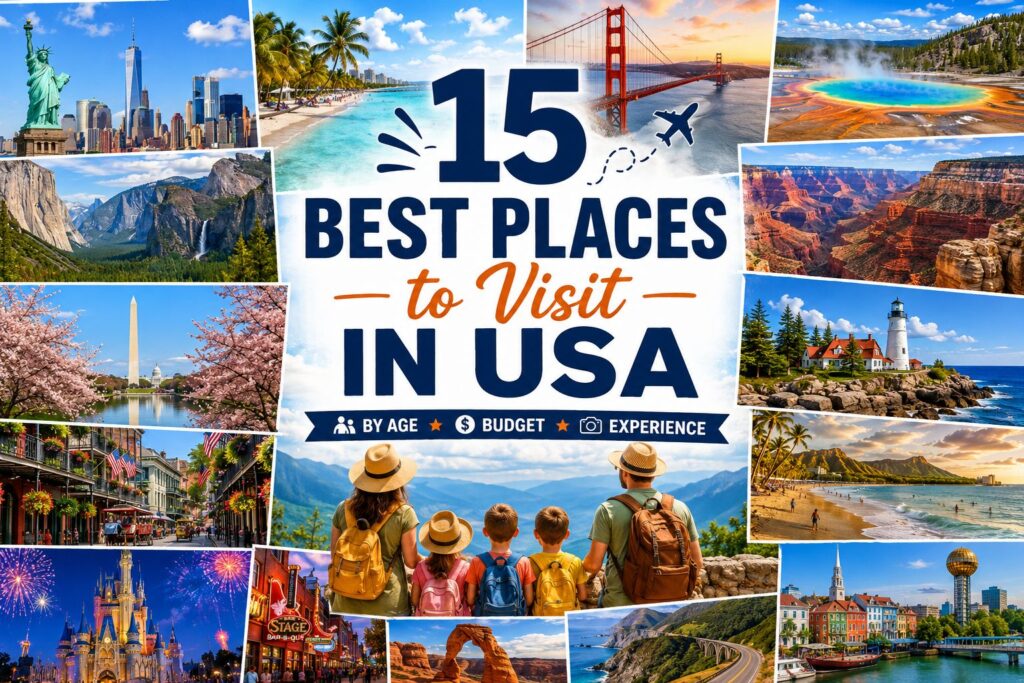
I have driven the Pacific Coast Highway from Oregon to San Diego in a rented convertible. I have eaten beignets at Cafe Du Monde in New Orleans at 2 AM while a jazz band played on the street outside. I have stood at the rim of the Grand Canyon at sunrise and watched the light change color across 1.8 billion years of exposed rock. I have spent a week in New York without once running out of extraordinary things to do.
The United States is the travel destination that most Americans have not fully explored and that most international visitors underestimate because they have seen it in films and television before ever setting foot on its soil. The real country is bigger, stranger, more beautiful, more varied, and more surprising than any screen version of it.
At Travel Destinations Plan, we cover the world’s finest destinations across every continent. The US travel destinations on this list represent the country at its most extraordinary and its most distinct. Whether you are planning your first American road trip, seeking the finest national parks, or building a bucket list of the country’s most memorable experiences, this guide covers every category.
How to Use This Guide
- East Coast: New York City, Washington DC, Savannah, Charleston, Acadia
- South and Gulf Coast: New Orleans, Nashville, Miami, Asheville
- West Coast: San Francisco, Pacific Coast Highway, Oregon Coast
- Mountain West and Desert Southwest: Grand Canyon, Sedona, Moab, Denver
- National Parks: Yellowstone, Yosemite, Zion, Grand Teton
- Islands and Tropics: Hawaii, Florida Keys
- Road Trip Routes: Best American road trips by region
- Planning Your USA Trip: Itineraries, transport, budget, seasons
- FAQ: Most common US travel questions answered
East Coast: History, Cities, and Coastal Beauty
1. New York City
Best for: Culture, food, arts, urban energy | Days recommended: 5 to 7 | Budget: Mid-range to luxury
New York City is the most visited US travel destination for international visitors and one of the most visited cities on Earth. The reason is straightforward: it has more concentrated excellence across more categories of human endeavor than any other city in the world. It has more Michelin-starred restaurants than Paris, more world-class museums than London, more live music venues than Nashville, and more architectural landmarks than Rome. And all of it accessible on one of the world’s finest public transit systems for a fraction of the price of a taxi in any other global city.
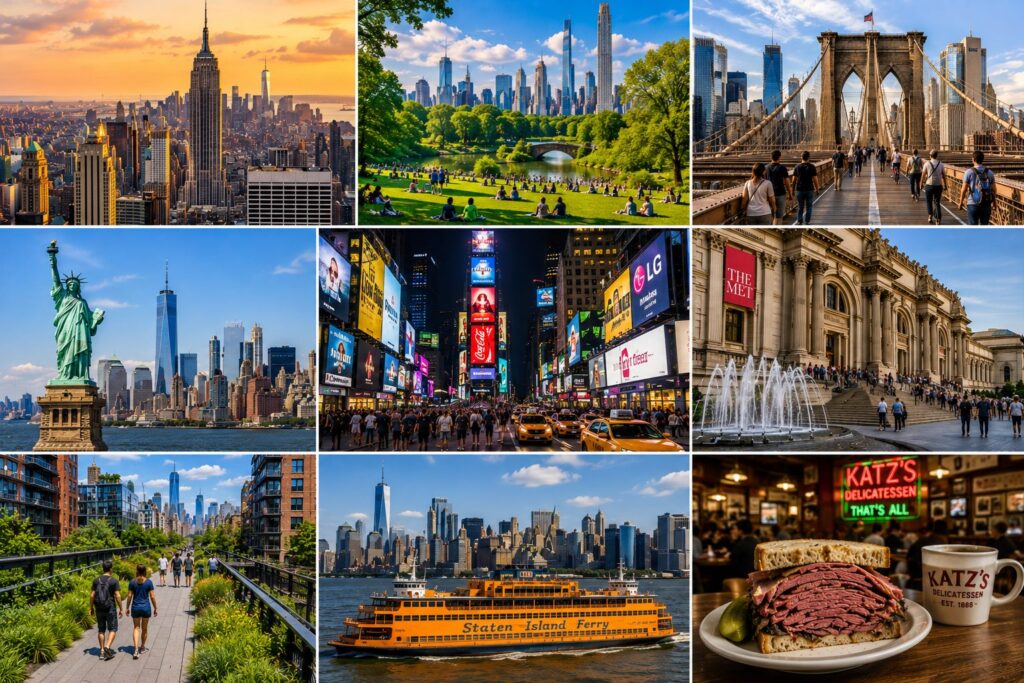
Why New York rewards every type of traveler: Manhattan alone contains enough material for three weeks of serious exploration. The Metropolitan Museum of Art on Fifth Avenue is the greatest general art museum in the Western Hemisphere and free to enter on a suggested donation basis. The American Museum of Natural History, with its dinosaur halls and its Rose Center for Earth and Space, is among the world’s finest natural history institutions. MoMA’s permanent collection traces the entire history of modern art from Cézanne to the present.
Central Park is the finest urban park in the world. 843 acres of green space in the center of a city of 8 million people, designed with such skill by Frederick Law Olmsted that it feels simultaneously natural and perfectly composed. The High Line is a former elevated freight railway converted into a 1.45-mile linear park tracing the edge of the Meatpacking District and Chelsea, with art installations, food stalls, and views of the Hudson River.
The food culture of New York City is genuinely global and genuinely excellent at every price point. The best pizza in the country is in New York, specifically in the old-school coal-fired slice joints of the West Village and the newer Neapolitan restaurants in Brooklyn. The Jewish deli tradition at Katz’s Delicatessen on the Lower East Side has operated since 1888 and produces pastrami that has no peer anywhere in the world. The night market food courts in Flushing, Queens, represent Chinese regional cuisine at a quality that rivals what you find in Shanghai.
Practical tips for New York City:
- The subway is safe, efficient, and covers the entire city for $2.90 per ride using the OMNY contactless tap system on any bank card or phone
- Stay in Midtown for proximity to major attractions, or in Brooklyn for better value and a more local atmosphere
- The Staten Island Ferry is free, runs every 30 minutes, and provides the finest free view of the Statue of Liberty and the Manhattan skyline
- Book the One World Observatory, the Top of the Rock at Rockefeller Center, or the Edge at Hudson Yards well in advance as they sell out on weekends
- Visit the 9/11 Memorial and Museum with at least 3 hours and prepare emotionally for an experience that is profoundly moving
Best time to visit: April to June and September to November for the finest weather and manageable crowds. December is magical for the holiday atmosphere and window displays.
Top experiences: Central Park, The Met, High Line, Brooklyn Bridge walk, Staten Island Ferry, Katz’s Deli, evening in the West Village, MoMA, Flushing night market.
2. Washington DC
Best for: History, politics, free museums | Days recommended: 3 to 4 | Budget: Budget to mid-range
Washington DC is the only major capital city in the developed world where the finest museums, galleries, and monuments are entirely free to enter. The Smithsonian Institution operates 19 museums on and around the National Mall, covering American history, natural history, air and space, African American history, and the arts across a campus that takes several full days to explore properly.
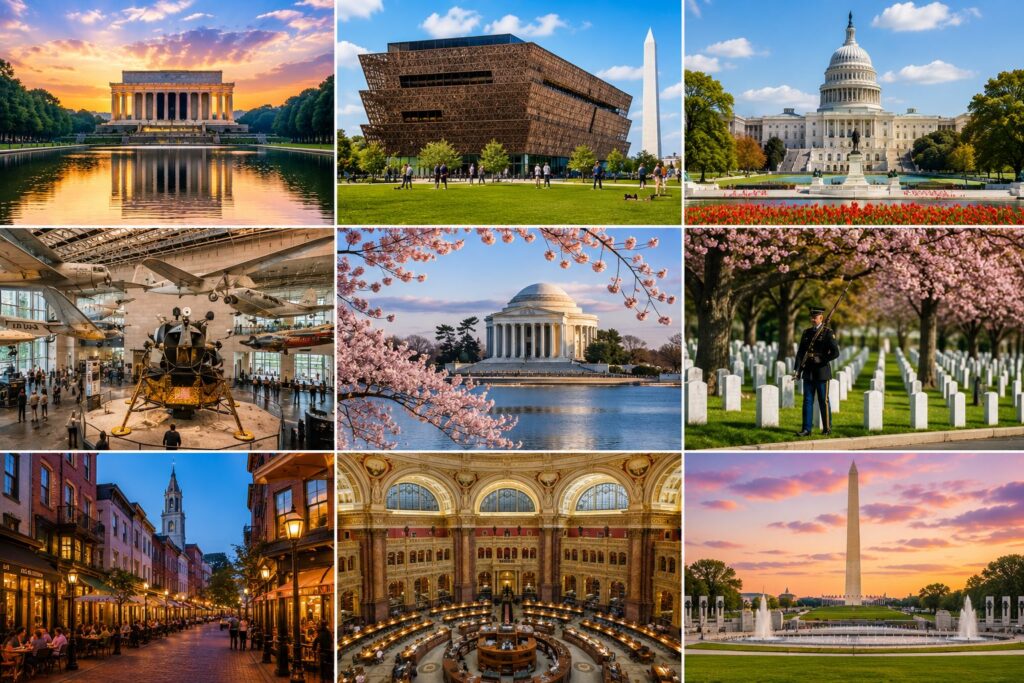
Why DC belongs on every American travel list: The National Museum of African American History and Culture, opened in 2016 on the National Mall, is the most important new American museum of the 21st century. Its six floors trace the complete history of African American experience in the United States from the slave trade to the present through objects, personal testimonies, photographs, and interactive installations of extraordinary depth and care. Allow a full day. Book timed entry passes months in advance.
The Lincoln Memorial at dawn, before the tour groups arrive, with the Reflecting Pool mirror-still and the Capitol visible at the far end of the Mall, is one of the finest moments in American travel. Reading the Gettysburg Address carved into the marble wall inside the memorial, standing in the same spot where Martin Luther King delivered the I Have a Dream speech in 1963, connects you to American history in a way that no book quite replicates.
Practical tips for Washington DC:
- Book Smithsonian timed-entry passes as far in advance as possible, especially for the African American History Museum which books out months ahead
- The DC Metro is excellent and connects all major attractions efficiently
- Georgetown neighborhood offers the finest restaurant and cafe concentration in the city along M Street and Wisconsin Avenue
- The Library of Congress, directly behind the Capitol, has one of the most beautiful reading rooms in the world and is free to visit
Best time to visit: March to April for cherry blossom season along the Tidal Basin. September to November for the finest weather.
Top experiences: National Museum of African American History and Culture, Lincoln Memorial at dawn, National Air and Space Museum, Arlington Cemetery, Georgetown evening walk, Library of Congress.
3. Savannah and Charleston
Best for: Southern history, architecture, food, atmosphere | Days recommended: 2 to 3 each | Budget: Mid-range
Savannah, Georgia, and Charleston, South Carolina, are the two finest historic cities in the American South. They represent a version of the United States that visitors from other countries are consistently unprepared for. The tree-canopied squares of Savannah, the antebellum mansions draped in Spanish moss, the cobblestone streets of Charleston’s Rainbow Row, and the food traditions of the Low Country that blend African, Caribbean, and European influences into one of America’s most distinct regional cuisines. These are destinations that feel genuinely unlike anywhere else in the country.
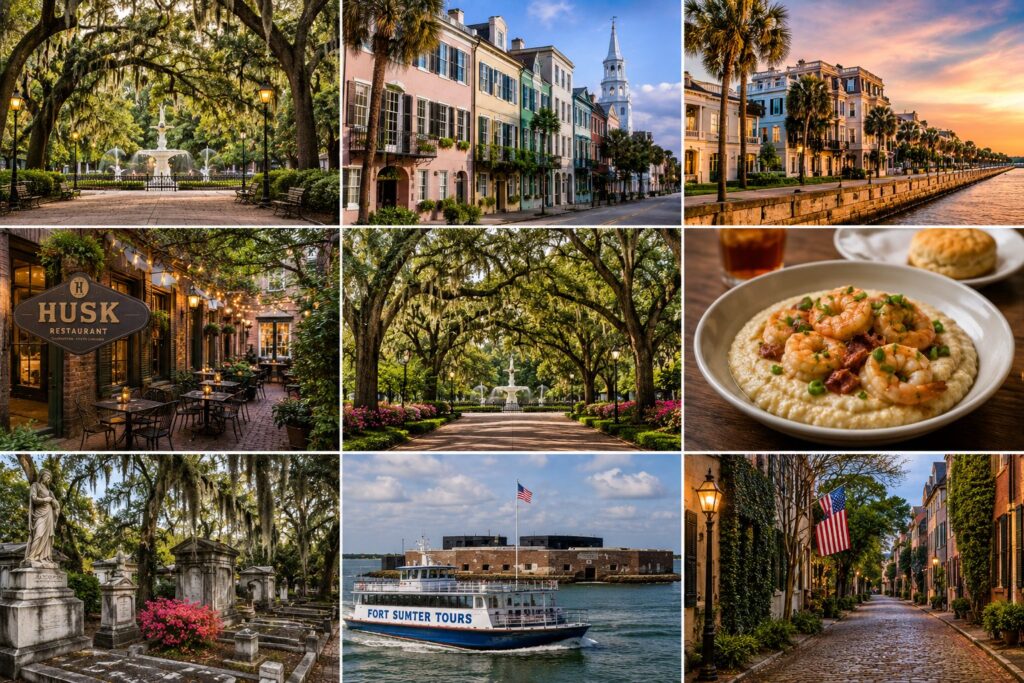
Why these cities are essential US travel destinations: Savannah’s 22 historic squares, each a separate garden-park surrounded by antebellum architecture, create a city that functions as a continuous walkable park. The squares were designed in James Oglethorpe’s 1733 plan for the city and remain largely intact as the finest example of planned historic urban design in America. Walking from square to square in the early morning, under live oaks draped in Spanish moss with the light coming through the leaves, is a specific atmospheric experience that belongs to Savannah alone.
Charleston’s food scene has become one of the most celebrated in the South. Husk restaurant, Sean Brock’s flagship in an 1893 building on Queen Street, uses only ingredients grown or raised in the South and has effectively codified what contemporary Southern cooking can be at its highest level. The Low Country cuisine tradition of shrimp and grits, she-crab soup, and oyster roasts is available across the city at price points from hole-in-the-wall lunch counters to white-tablecloth restaurants.
Practical tips:
- Both cities are best explored entirely on foot as they are compact, walkable, and deeply layered
- Book restaurant reservations in both cities well in advance, especially at Husk in Charleston
- The ferry from Savannah to Tybee Island takes 20 minutes and the beach there is excellent
- Fort Sumter National Monument in Charleston Harbor, where the Civil War began in April 1861, is reached by ferry and offers one of the most historically significant short excursions in the American South
Best time to visit: March to May and October to November. Avoid July and August when heat and humidity are extreme.
Top experiences: Savannah’s historic squares, Forsyth Park, Charleston Rainbow Row, Husk restaurant, Fort Sumter ferry, Low Country cooking class, Bonaventure Cemetery Savannah.
4. Acadia National Park, Maine
Best for: Coastal scenery, hiking, fall foliage | Days recommended: 3 to 4 | Budget: Mid-range
Acadia National Park on Mount Desert Island in Maine is the only national park on the East Coast with a significant mountain and the only place in the country where you can stand on granite summit above the Atlantic Ocean. Cadillac Mountain, at 1,530 feet the highest point on the US East Coast, is the first place in the continental United States to receive the sunrise from October through March, a fact that draws dedicated visitors from across the country for the experience of watching the first light of the American day touch the Atlantic from that summit.
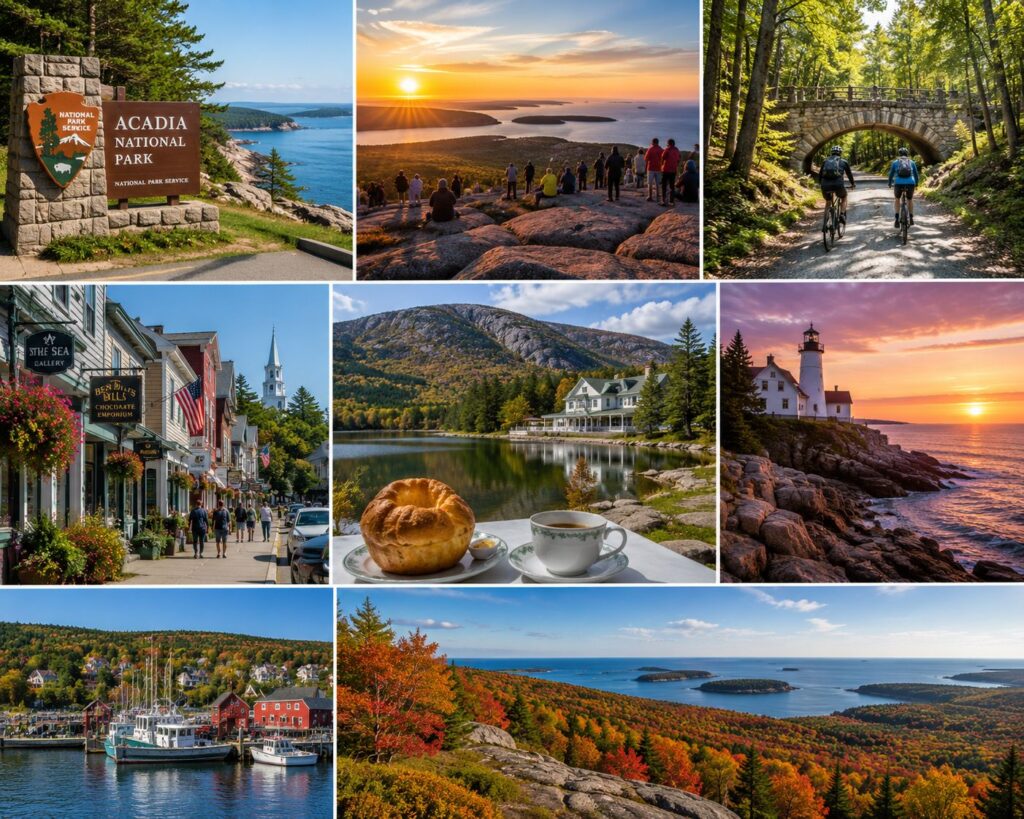
Why Acadia deserves its own stop: The Park Loop Road is one of the finest scenic drives in America. Jordan Pond, surrounded by mountains reflected in still water, is the visual centerpiece of the park and the location of the Jordan Pond House which has served popovers and tea on its lawn overlooking the water since 1847. The carriage road network, 45 miles of broken-stone roads built by John D. Rockefeller Jr. in the 1910s through the forest and over stone arch bridges, offers cycling of extraordinary beauty through a landscape largely unchanged since they were built.
Bar Harbor village, the gateway town to the park, has become one of the finest small food towns in New England, with excellent seafood, outstanding bakeries, and a summer farmers market that represents the quality of Maine coastal produce at its finest.
Practical tips:
- Book the Cadillac Mountain Summit Road timed-entry permit at Recreation.gov months in advance for sunrise visits
- Rent bicycles in Bar Harbor for the carriage roads because Acadia is one of the finest cycling destinations in the Northeast
- The Bass Harbor Head Lighthouse at the southwestern tip of the island is the most photographed lighthouse in New England
Best time to visit: Late September to mid-October for fall foliage. June to August for full summer activities. Sunrise in October is extraordinary.
The American South: Music, Food, and Living Culture
5. New Orleans
Best for: Music, food, culture, festivals | Days recommended: 3 to 4 | Budget: Mid-range
New Orleans is the most culturally distinct city in the United States. It is the birthplace of jazz, the home of Creole and Cajun cooking, and a city where the French Quarter’s wrought-iron balconies and the Garden District’s antebellum mansions exist alongside a Caribbean street culture with no parallel anywhere else in the country. New Orleans is also one of the finest US travel destinations for food, a city where eating well requires almost no effort and almost no money.
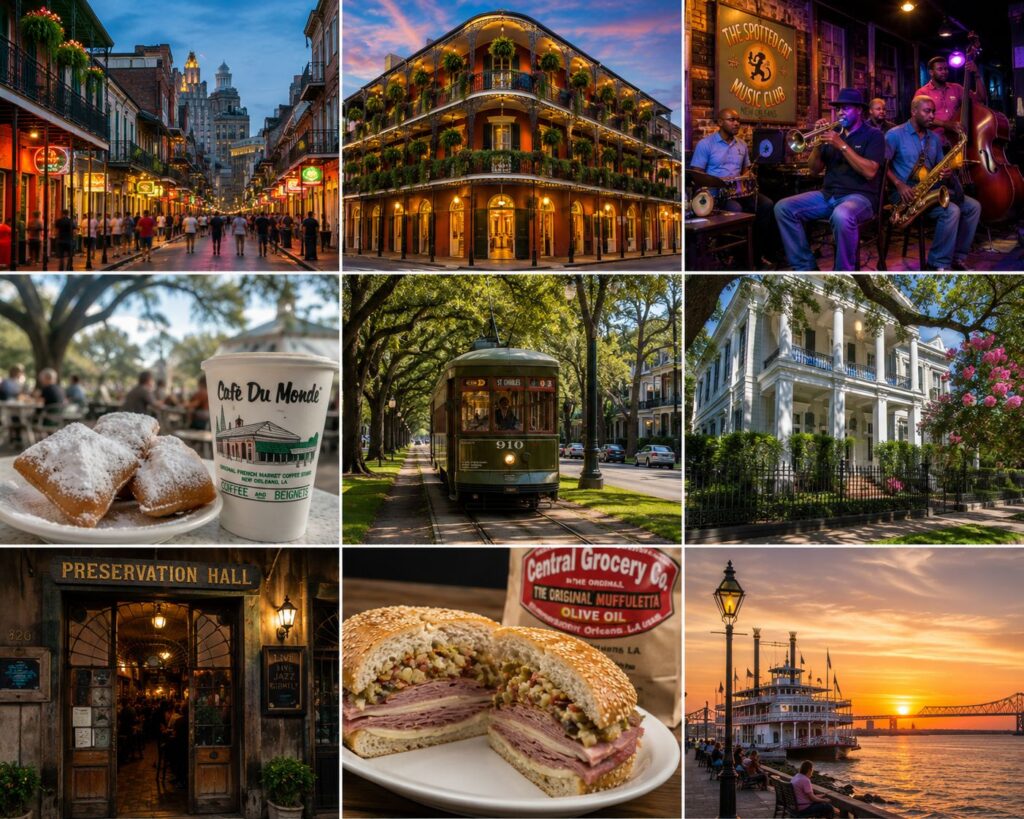
Why New Orleans belongs on every US travel bucket list: The French Quarter is simultaneously the most touristy and the most authentic neighborhood in America. The tourists are real but so is everything they are drawn to. The jazz clubs on Frenchmen Street, where local bands play nightly to mixed local and visitor audiences, represent live music of genuine quality rather than performance for tourists. The Preservation Hall on St Peter Street, operated since 1961 as a dedicated venue for traditional New Orleans jazz, hosts nightly concerts in a small, hot, packed room that delivers an experience of live music’s communal power that concert halls with assigned seating cannot replicate.
The food culture of New Orleans is its greatest gift to American cooking. Beignets at Cafe Du Monde, the 24-hour open-air cafe at the edge of Jackson Square, with powdered sugar drifting across the table and the Mississippi River visible through the trees, constitute one of the finest cheap breakfast experiences in the country. The muffuletta at Central Grocery on Decatur Street, a round Italian bread sandwich loaded with olive salad, Italian meats, and cheese invented in New Orleans in 1906, is a full meal for two people. Commander’s Palace in the Garden District serves the finest formal New Orleans cuisine in one of America’s greatest restaurant rooms.
Practical tips for New Orleans:
- Stay in the Garden District for a quieter, more residential experience than the French Quarter
- Frenchmen Street rather than Bourbon Street is where the genuine music culture lives
- The streetcar lines on St Charles Avenue and Canal Street are functional public transit and cost $1.25 per ride
- Avoid Mardi Gras unless you specifically want that experience because it is extraordinary but genuinely overwhelming
- Hurricane season runs June to November; September and October see the lowest tourist numbers and some of the best local energy in the city
Best time to visit: March to May and October to November for the finest weather and the most manageable crowds.
Top experiences: Frenchmen Street jazz nightly, beignets at Cafe Du Monde, Commander’s Palace dinner, Garden District walking tour, Preservation Hall, muffuletta at Central Grocery, Mississippi River sunset.
6. Nashville
Best for: Music, food, live entertainment | Days recommended: 2 to 3 | Budget: Mid-range
Nashville has undergone a transformation in the past decade from a country music industry town to one of America’s most visited cities, and the reasons are easy to understand when you arrive. The live music culture, which extends far beyond country into rock, Americana, and roots music, is genuine and accessible at every budget. The food scene has developed into one of the South’s finest. And the city has a specific energy, a combination of Southern hospitality and creative ambition, that makes it feel genuinely welcoming to visitors in a way that larger cities sometimes cannot manage.
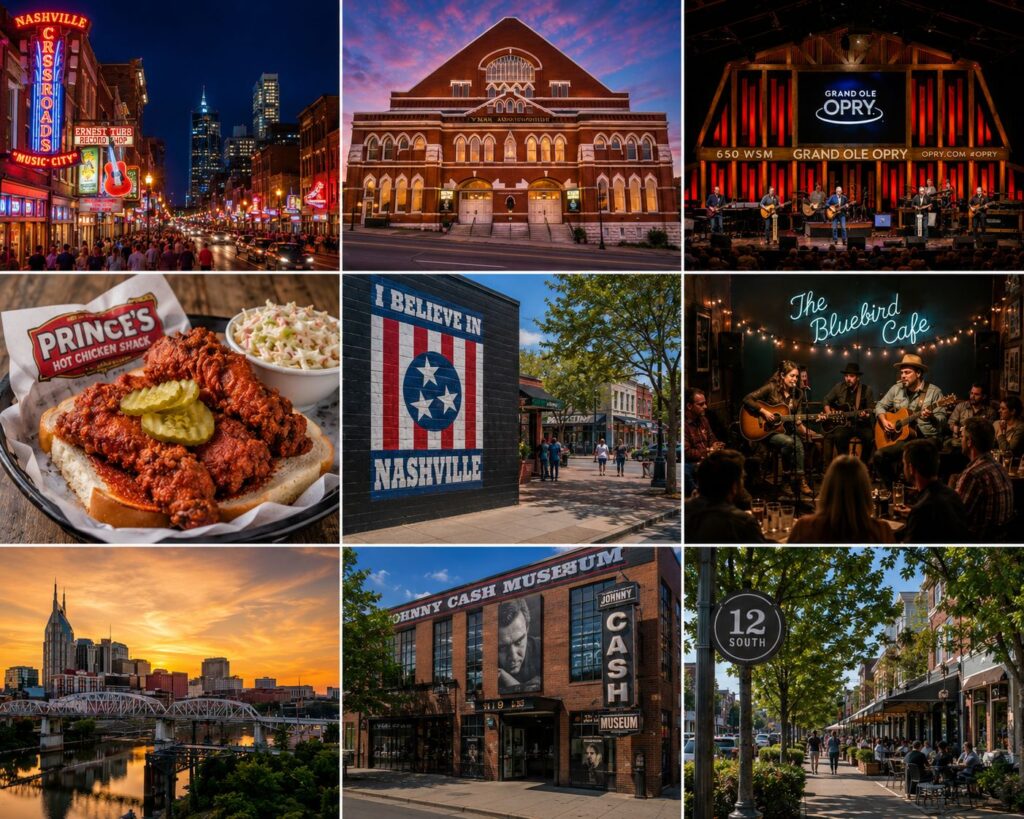
Why Nashville is a standout US travel destination: Broadway, the main entertainment street in downtown Nashville, is lined with honky-tonk bars where live bands play from 10 AM to 3 AM with no cover charge. This is not manufactured entertainment for tourists. These are working musicians playing real sets to real audiences, some of whom will be performing at the Grand Ole Opry or recording at RCA Studio B next week. The accessibility of the live music culture is Nashville’s defining characteristic and genuinely unlike anything available in any other American city.
The Ryman Auditorium, the original home of the Grand Ole Opry from 1943 to 1974, is one of America’s finest concert venues and hosts performers across all genres in a 2,362-seat church-like space with extraordinary acoustics. A show at the Ryman is one of the finest live music experiences in the country.
Practical tips for Nashville:
- Reserve show tickets at the Ryman, Grand Ole Opry, and Bluebird Cafe well in advance
- The 12 South and East Nashville neighborhoods offer the finest restaurant concentration away from the tourist center
- Prince’s Hot Chicken Shack on Ewing Drive invented Nashville-style hot chicken and remains the finest version available
Best time to visit: April to May and September to October.
Top experiences: Broadway live music, Ryman Auditorium concert, Grand Ole Opry, Prince’s Hot Chicken, Johnny Cash Museum, 12 South neighborhood dining.
7. Miami and South Florida
Best for: Beach, nightlife, art, Latin culture | Days recommended: 3 to 4 | Budget: Mid-range to luxury
Miami is the most culturally complex city in the American South and the most internationally oriented city in the continental United States. Its culture is neither fully American nor fully Latin American but something specific to the city itself, a fusion of Cuban, Colombian, Haitian, Brazilian, and Floridian influences that has produced a food scene, a music culture, an art world, and a street life that are entirely Miami’s own.
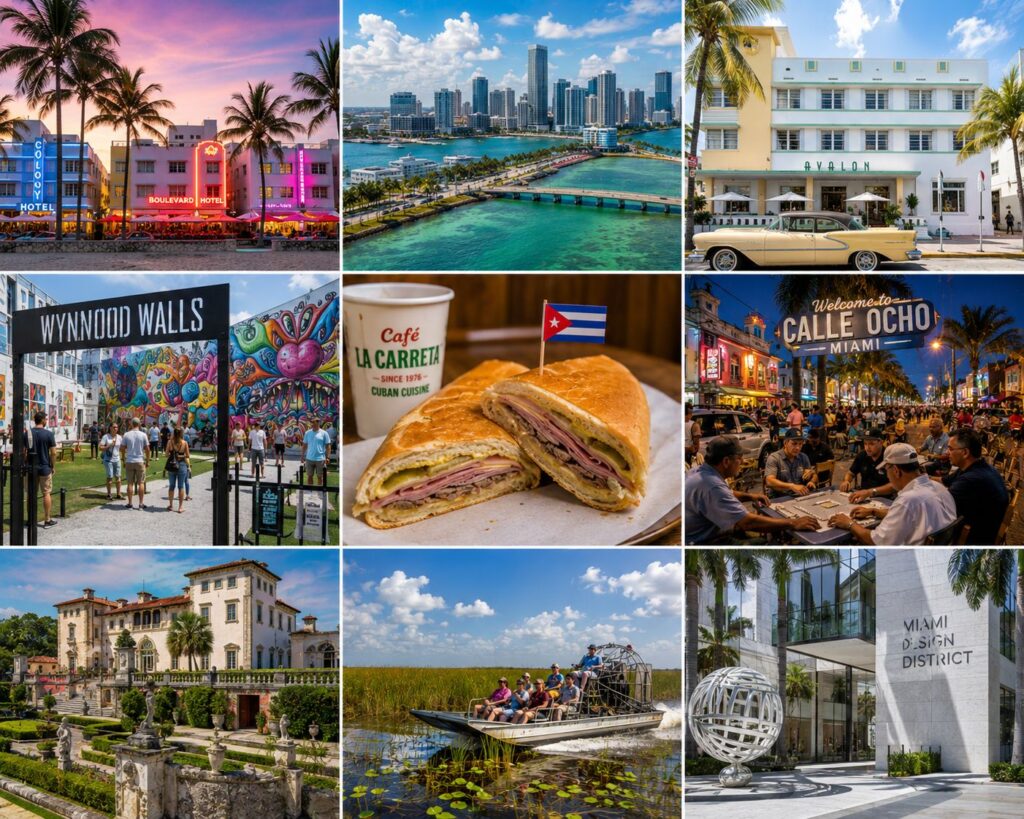
Why Miami stands apart: The Art Deco Historic District of South Beach, the largest collection of Depression-era Art Deco architecture in the world, is best experienced by walking Ocean Drive and Collins Avenue in the early morning before the beach crowds arrive. The pastel facades, the neon signs, and the geometric details of these buildings constitute one of America’s finest examples of architectural preservation. The Wolfsonian Museum on Washington Avenue holds a collection of design objects and propaganda art from the 1885 to 1945 period that is among the most surprising and illuminating museum experiences in Florida.
Wynwood, Miami’s arts district, has transformed from an industrial warehouse zone into one of the world’s most concentrated outdoor street art galleries. The Wynwood Walls, an open-air museum of large-scale murals by leading street artists from across the world, can be explored free of charge and serves as the anchor for a neighborhood of independent galleries, restaurants, and bars that represents Miami’s creative culture at its most current.
Practical tips for Miami:
- Stay in South Beach or the Design District for the most walkable Miami experience
- Uber or rideshare between neighborhoods as Miami’s public transit is limited
- Little Havana’s Calle Ocho is best experienced on a Friday evening when the street comes alive with outdoor music and domino games in Maximo Gomez Park
Best time to visit: November to April for dry season and lower humidity. May to October brings heat, humidity, and hurricane risk.
Top experiences: South Beach Art Deco walk, Wynwood Walls, Little Havana Calle Ocho, Vizcaya Museum and Gardens, Everglades day trip, Design District galleries.
West Coast: America’s Pacific Edge
8. San Francisco and Northern California
Best for: Culture, food, coastal scenery, wine | Days recommended: 4 to 5 | Budget: Luxury
San Francisco is the most topographically dramatic major city in the United States, built on 43 hills that create neighborhoods of such visual variety and atmospheric distinctness that walking between them feels like moving between different cities. The Painted Ladies Victorian houses on Alamo Square. The Mission District’s Spanish-language murals and the finest burrito in California at La Taqueria on Mission Street. The Ferry Building Marketplace at the Embarcadero where local farmers and food producers sell their products in a beautifully restored 1898 terminal. The Legion of Honor art museum in Lincoln Park with its views of the Golden Gate Bridge from the terrace.
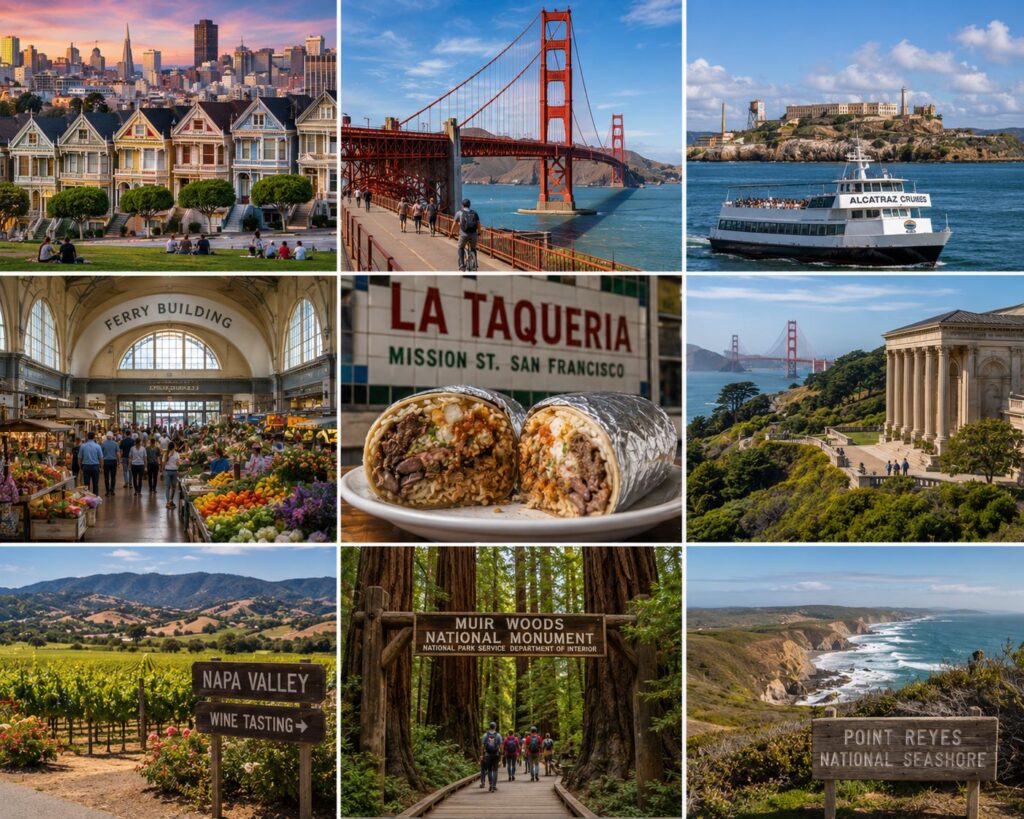
Why San Francisco rewards extended exploration: The Golden Gate Bridge walk, 1.7 miles each way across one of the world’s most beautiful engineered structures, is entirely free and consistently one of the most thrilling walks in America. Alcatraz Island, reached by ferry from Pier 33, offers one of the finest audio tour experiences in the country narrated by former inmates and guards who make the history of the federal penitentiary viscerally real.
The wine country day trips from San Francisco are some of the finest in the world. Napa Valley, 55 miles north, produces Cabernet Sauvignon of international reputation in a landscape of extraordinary beauty. Sonoma County, slightly further but less formally structured, produces a broader range of varietals with more accessible tasting room culture and better food to accompany the wine.
Practical tips for San Francisco:
- The BART system connects the airport to downtown in 30 minutes and is the most efficient way to arrive
- Fog in San Francisco is most common in summer, particularly in June and July. This phenomenon is known locally as Karl the Fog
- The Ferry Building Farmers Market on Saturday mornings is one of the finest food markets in California
- Book Alcatraz tickets at least 3 to 4 weeks in advance as the island sells out consistently
Best time to visit: September to November for the finest weather, warmest temperatures, and least fog.
Top experiences: Golden Gate Bridge walk, Alcatraz, Ferry Building Saturday market, Mission District tacos, Napa Valley day trip, Muir Woods redwoods, Point Reyes National Seashore.
9. The Pacific Coast Highway
Best for: Road trip scenery, coastal drives, Big Sur | Days recommended: 5 to 7 for full route | Budget: Mid-range
The Pacific Coast Highway, California State Route 1, runs 655 miles from Dana Point in the south to Leggett in the north and is the finest coastal drive in the United States and one of the finest in the world. The section between Carmel-by-the-Sea and San Simeon, commonly known as the Big Sur coast, delivers 90 miles of ocean cliffs, redwood forests, and views of the Pacific that have no equivalent in American road travel.
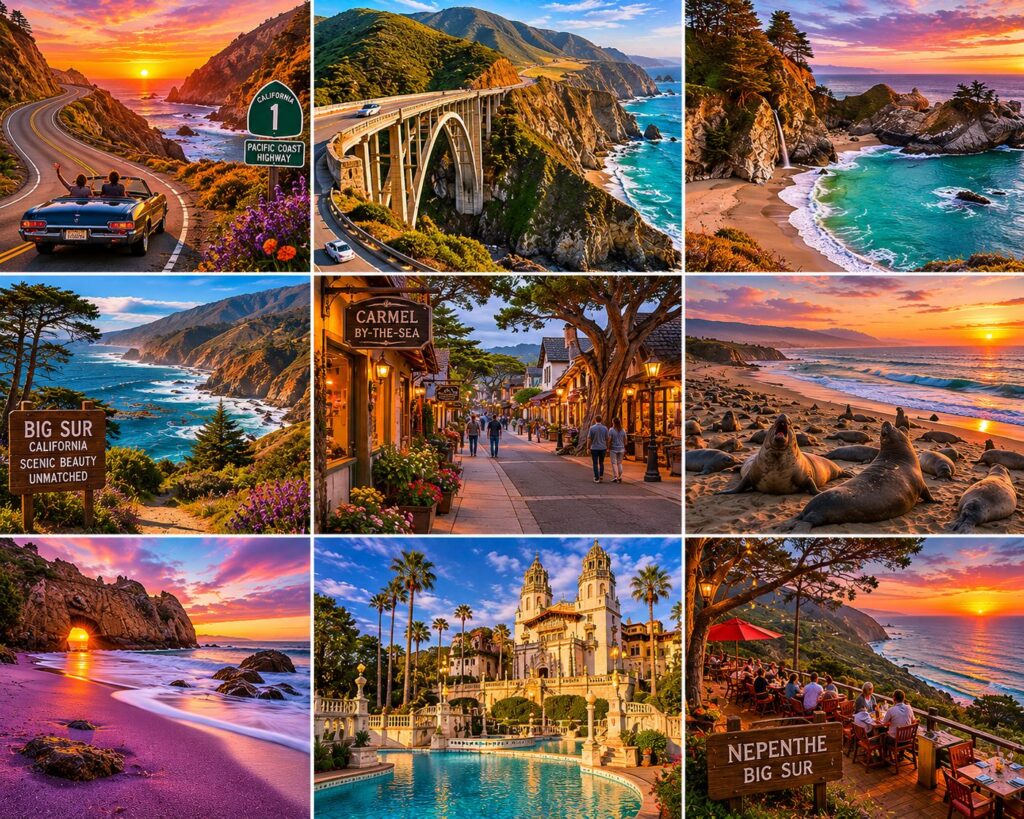
Why the PCH is a bucket list US travel experience: Bixby Creek Bridge, the most photographed bridge in California, arches 260 feet above the Pacific surrounded by mountains on three sides and ocean on the fourth. McWay Falls at Julia Pfeiffer Burns State Park drops 80 feet directly onto the sand of a beach accessible only by boat, creating a waterfall-on-beach composition that looks engineered for maximum beauty. The elephant seal colony at Piedras Blancas, north of San Simeon, spreads across the beach for hundreds of meters in a scene of biological abundance that makes the Big Sur coast feel genuinely wild.
Practical tips for the Pacific Coast Highway:
- Drive south to north for the most dramatic cliff-edge perspectives on the Big Sur section
- Book accommodation in Big Sur months in advance as options are extremely limited and fill completely in summer
- Gas stations are scarce on the Big Sur coast so fill up in Carmel or Cambria before driving the central section
- The drive from Los Angeles to San Francisco via the PCH takes 2 to 3 days at a comfortable pace
Best time to visit: April to June and September to October for the clearest skies and most comfortable temperatures.
Top experiences: Bixby Creek Bridge, McWay Falls, Pfeiffer Beach purple sand, Hearst Castle San Simeon, elephant seals at Piedras Blancas, sunset from Nepenthe restaurant Big Sur.
Mountain West and Desert Southwest
10. Grand Canyon, Arizona
Best for: Natural wonder, geology, hiking | Days recommended: 2 to 3 | Budget: Mid-range
The Grand Canyon is 277 miles long, up to 18 miles wide, and over a mile deep. No photograph has ever adequately conveyed the experience of standing at the rim and looking out. The first sight is genuinely incomprehensible because the human visual system has no reference point for that scale. You stand at the South Rim and your brain refuses to process what it is seeing for several minutes. Most visitors describe this as one of the finest feelings available in American travel.
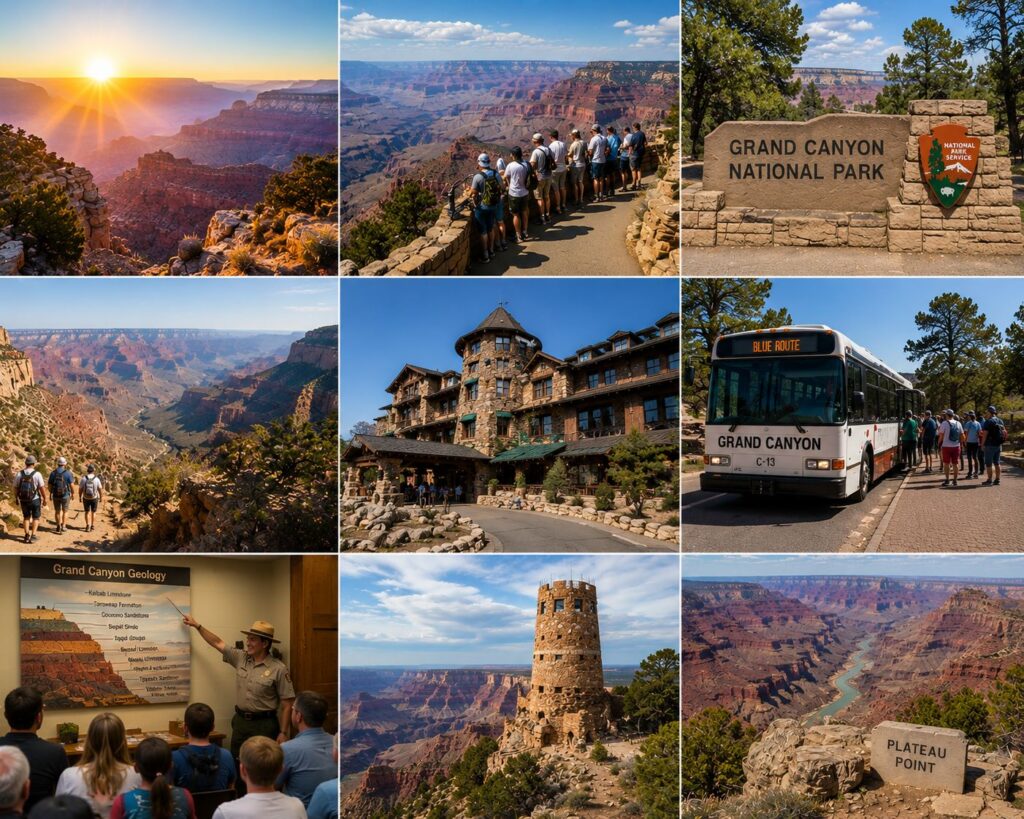
Why the Grand Canyon is America’s premier natural wonder: The canyon exposes 1.8 billion years of Earth’s geological history in its walls, each colored layer representing a different era of sediment, volcanic activity, or sea floor. The sequence from the Kaibab Limestone at the rim to the Vishnu Schist at the river below is the most complete geological record visible from a single viewpoint anywhere on Earth. Rangers lead free geology tours daily from the South Rim visitor center that transform the visual experience into a comprehensible narrative.
The Bright Angel Trail descends 4,380 feet from the South Rim to the Colorado River through four distinct climatic and ecological zones, the equivalent of traveling from Canada to Mexico in a single day’s hiking. Day hikers should descend no more than 1,000 feet in summer due to extreme heat at lower elevations. The 3-mile rest house and Indian Garden are achievable targets for most fit hikers.
Practical tips for the Grand Canyon:
- Book accommodation inside the park at El Tovar Hotel or Bright Angel Lodge 12 to 13 months in advance as they fill that far ahead
- The free shuttle system on the South Rim covers all major viewpoints without requiring a car
- Sunrise at Mather Point and sunset at Hopi Point are the two finest daily light events at the canyon
- Ranger-led programs at the visitor center are free and dramatically improve the experience
Best time to visit: March to May and September to November. Summer is very crowded and extremely hot at inner canyon elevations.
Top experiences: South Rim sunrise at Mather Point, Bright Angel Trail day hike, geology ranger program, Desert View Watchtower, Colorado River view from Plateau Point.
11. Sedona, Arizona
Best for: Red rock scenery, hiking, wellness | Days recommended: 2 to 3 | Budget: Mid-range
Sedona is the most visually extraordinary small town in the American Southwest and one of the most visually extraordinary small towns in the country. The red rock formations that surround it on every side, Cathedral Rock, Bell Rock, Courthouse Butte, the Coffeepot, rise from the high desert floor in shapes so structurally dramatic that they look like monuments built rather than eroded. The light on these formations at sunrise and sunset, when the red shifts toward orange and the shadows deepen to purple, constitutes some of the finest natural color in American travel.
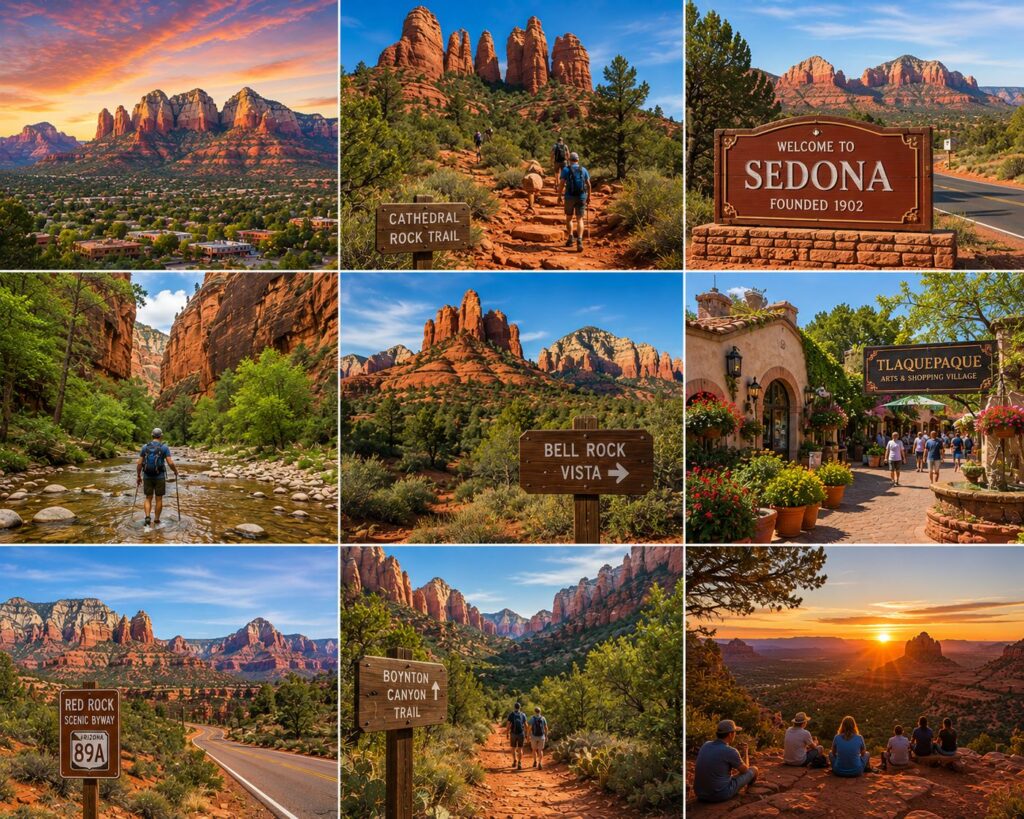
Why Sedona is more than its reputation suggests: The wellness industry has converged on Sedona to the point that the town has more spa and energy vortex businesses per capita than almost any destination in the country. These are easy to avoid. The hiking is exceptional and entirely free. The Cathedral Rock trail delivers what many hikers describe as the finest short view in the Southwest from the summit. The West Fork trail into Oak Creek Canyon is 6.5 miles of creek crossings and red canyon walls that is genuinely one of the finest canyon hikes in Arizona.
Practical tips for Sedona:
- Book Red Rock Pass for trailhead parking at $15 per day as it is required at most trailheads
- The town of Jerome, an arts community in a former copper mining town 30 minutes north, is worth a half-day addition
- Tlaquepaque Arts and Shopping Village is one of the finest artisan shopping environments in the Southwest
Best time to visit: March to May and October to November. Summer is hot but manageable at Sedona’s 4,500-foot elevation.
Top experiences: Cathedral Rock sunrise hike, West Fork Oak Creek Canyon, Red Rock crossing views, Boynton Canyon trail, sunset from Airport Mesa vortex.
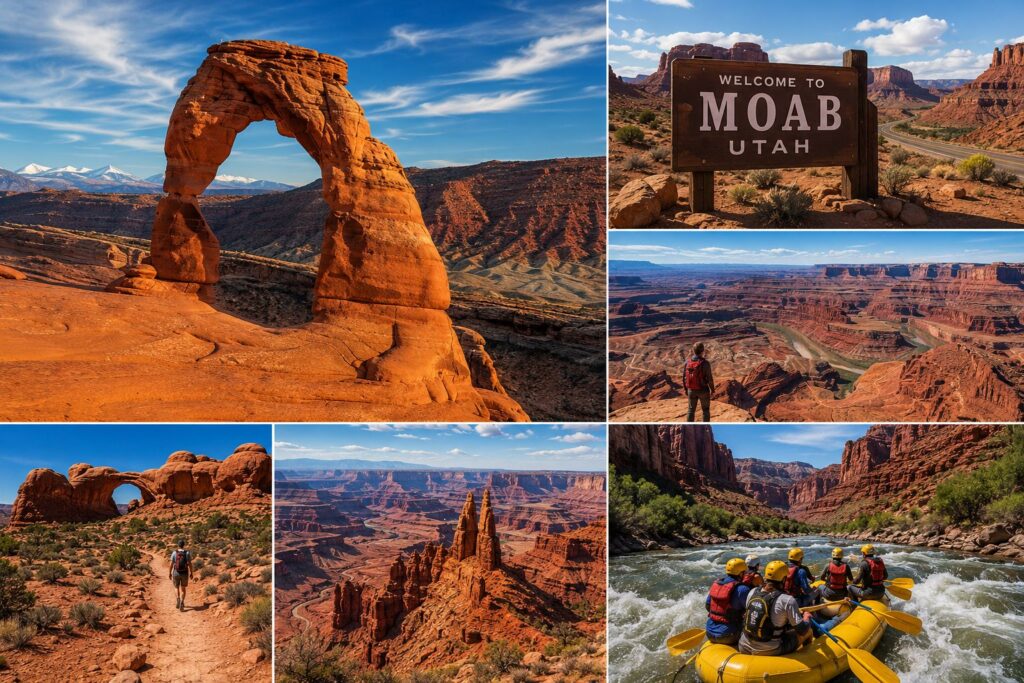
12. Moab and Utah’s Canyon Country
Best for: Adventure, red rock landscapes, national parks | Days recommended: 3 to 5 | Budget: Mid-range
Moab, Utah, is the base camp for two of America’s finest national parks and the adventure capital of the American Southwest. Arches National Park, 5 miles from town, contains over 2,000 natural sandstone arches including Delicate Arch, the most photographed natural landmark in Utah and the state’s most iconic image. Canyonlands National Park, 30 miles from town, is larger, wilder, and considerably less visited, offering mesa-top views of canyon systems so vast that the scale defeats comprehension in much the same way the Grand Canyon does.
Practical tips for Moab:
- Book timed-entry permits for Arches National Park at Recreation.gov as the park now requires them daily
- The drive to Delicate Arch trailhead at sunset is one of the most reliably beautiful experiences in American national park travel
- White water rafting on the Colorado River through Cataract Canyon is one of the finest multi-day adventure experiences in the Southwest
Best time to visit: March to May and September to November. Summer heat at Moab’s low elevation is extreme.
America’s National Parks: The Greatest System on Earth
13. Yellowstone National Park
Best for: Geothermal wonders, wildlife, wilderness | Days recommended: 4 to 5 | Budget: Mid-range
Yellowstone was established in 1872 as the world’s first national park and remains one of its greatest. The park sits on top of one of the world’s largest active volcanoes and contains more geothermal features than any other place on Earth, including more than 10,000 geysers, hot springs, mud pots, and fumaroles. Old Faithful erupts to a height of 130 to 185 feet every 60 to 110 minutes with a predictability that has made it the most famous geyser in the world.
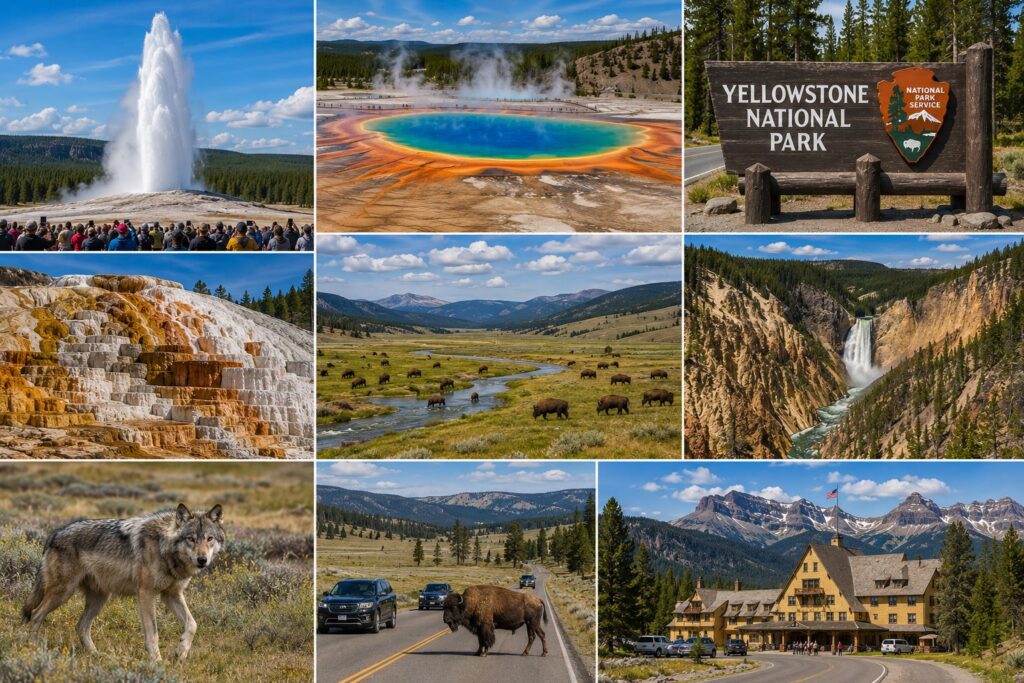
Why Yellowstone is a defining US travel destination: The Grand Prismatic Spring is 370 feet in diameter, the largest hot spring in the United States. Its concentric rings of bacterial mats produce bands of orange, yellow, and green around a deep blue center that is genuinely startling in person. The Lamar Valley in the park’s northeast corner is America’s finest wildlife watching destination, where bison herds of several hundred animals graze roadside, wolf packs have been successfully reintroduced and are seen regularly by patient observers, and grizzly bears forage in open meadows visible from the road.
Practical tips for Yellowstone:
- Book accommodation inside the park at lodges operated by Xanterra 12 months in advance as they fill immediately on opening day
- Dawn in the Lamar Valley for wolf and bear watching is the finest wildlife watching experience available in the continental United States
- The Grand Loop Road covers all major features and takes 2 full days to drive with stops
Best time to visit: May to June and September to October for wildlife activity and manageable crowds. July and August are very crowded but all facilities are operating.
Top experiences: Old Faithful, Grand Prismatic Spring, Lamar Valley wildlife dawn, Grand Canyon of the Yellowstone, Mammoth Hot Springs terraces.
14. Yosemite National Park
Best for: Granite cliffs, waterfalls, forests | Days recommended: 3 to 4 | Budget: Mid-range
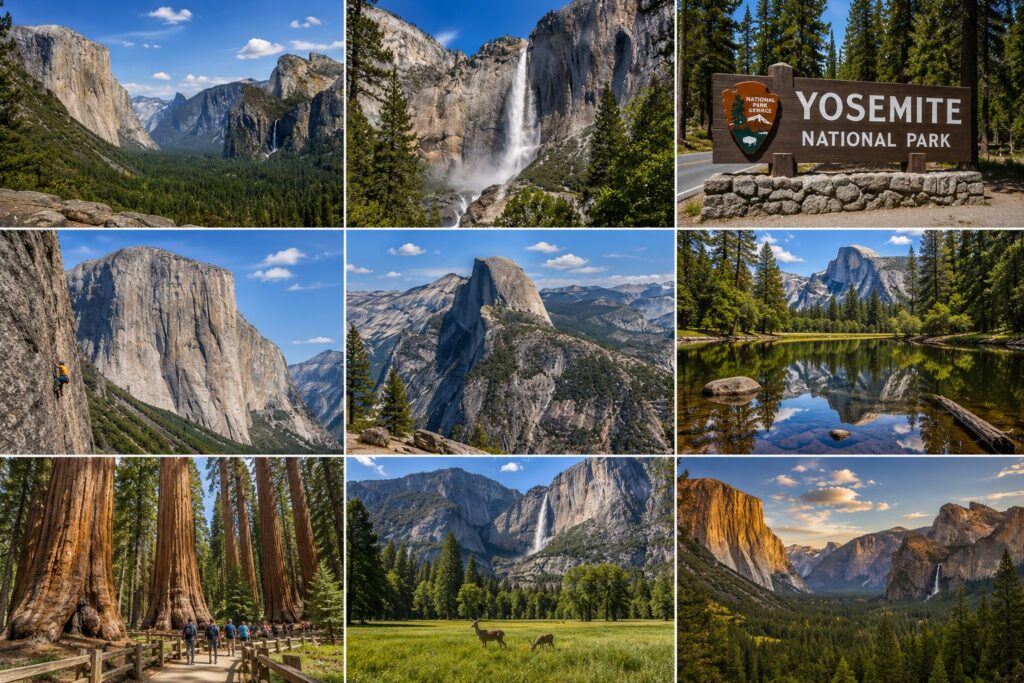
Yosemite Valley is 7 miles long and 1 mile wide, enclosed by vertical granite walls rising 3,000 to 4,000 feet on both sides. It contains the highest waterfall in North America, the largest piece of exposed granite in the world, and groves of giant sequoias that are the largest living organisms by volume on Earth. In the spring when the snowmelt waterfalls are at full force and the valley floor is vivid green and the walls catch the late afternoon light, Yosemite Valley is one of the most beautiful places in North America.
Practical tips for Yosemite:
- A timed entry reservation is required from 5 AM to 4 PM daily from April through October so book at Recreation.gov several months ahead
- The Valley Floor Tour is the best overview for first-time visitors
- Half Dome cables permit is required and you must apply in the spring lottery for summer dates
Best time to visit: April to June for the highest waterfalls and best conditions.
Top experiences: Valley view at Tunnel View, Yosemite Falls, El Capitan base, Half Dome trail, Mariposa Grove giant sequoias, Mirror Lake reflection.
Islands and Tropics: America’s Tropical Escapes
15. Hawaii
Best for: Beaches, volcanoes, whale watching, Pacific culture | Days recommended: 10 to 14 for two islands | Budget: Mid-range to luxury
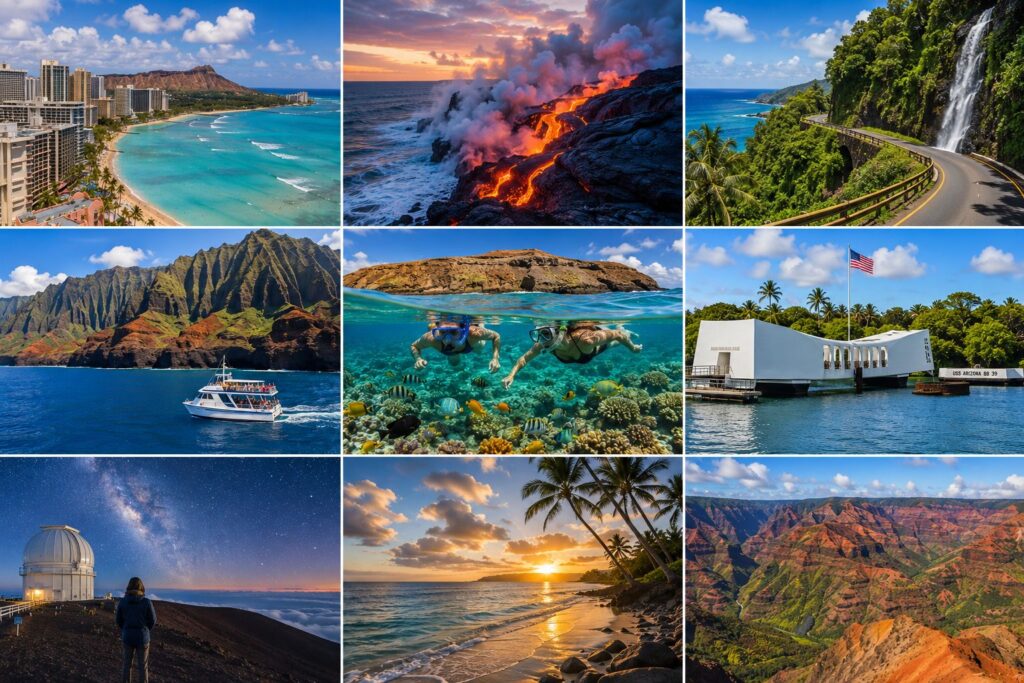
Hawaii is America’s most extraordinary island state and one of the finest travel destinations in the Pacific. Each main island has a distinct character. Oahu offers Honolulu, Waikiki Beach, and the Pearl Harbor National Memorial. Maui offers the Road to Hana, Molokini Crater snorkeling, and Haleakala crater at sunrise. The Big Island offers Hawaii Volcanoes National Park, active lava flows, and stargazing from Mauna Kea at 13,796 feet. Kauai offers the Na Pali Coast, Waimea Canyon, and the northernmost tropical beaches in the United States.
For families traveling to Hawaii, our full guide to the best places to travel with kids covers Hawaii as one of the top family destinations in the world with age-specific recommendations and practical planning details.
Why Hawaii is a top US travel destination: Hawaii has no jet lag for mainland American travelers, no passport requirement, no foreign currency, and no language barrier, yet delivers an experience of genuine geographic and cultural distinctness that most international destinations require a transatlantic flight to achieve. The aloha spirit, a genuine cultural orientation toward hospitality, generosity, and respect for visitors, makes Hawaii feel welcoming in a specific and sincere way.
Practical tips for Hawaii:
- Use reef-safe sunscreen only as regular chemical sunscreens are banned to protect coral reefs
- Maui and Kauai are the best first-time island choices for a balance of activities, scenery, and infrastructure
- December to March is humpback whale season in the channels between islands. Book whale watching tours during this window.
Best time to visit: April to June and September to November for the finest weather, lower crowds, and better prices.
Top experiences: Hawaii Volcanoes National Park lava, Road to Hana Maui, Na Pali Coast boat tour, Molokini snorkeling, Pearl Harbor Memorial, Mauna Kea stargazing.
Best American Road Trips
Route 66: Chicago to Los Angeles (2,448 miles) The most iconic American road trip follows the original 1926 highway through 8 states covering Chicago, Springfield, the Oklahoma panhandle, Amarillo Texas, Albuquerque, Flagstaff, and the Mojave Desert to Santa Monica. Allow 2 to 3 weeks for the full route.
New England Fall Foliage Loop (7 to 10 days) Boston outward through Vermont’s Green Mountains, New Hampshire’s White Mountains, coastal Maine, and back through Massachusetts. Peak foliage runs from late September in Vermont to mid-October in Massachusetts.
Pacific Coast Highway: Los Angeles to San Francisco (5 to 7 days) The definitive California coastal drive covered in detail in this guide. Drive south to north for the best cliff-edge perspectives on the Big Sur section.
The Mountain National Parks Loop: Denver outward (10 to 14 days) Rocky Mountain National Park, Great Sand Dunes, Mesa Verde, Monument Valley, Bryce Canyon, Zion, the Grand Canyon, and Arches and Canyonlands from Moab, returning to Denver through the Rocky Mountain corridor.
Planning Your US Travel
Getting Around the United States
By plane: Domestic air travel is the most efficient way to cover the country’s vast distances. Southwest, Delta, United, and American Airlines all offer competitive fares booked in advance. Budget carriers including Frontier and Spirit serve secondary cities at very low prices with significant restrictions on baggage.
By car: The United States is fundamentally a car culture and most of its finest travel experiences require one. Car rental is straightforward, well-priced, and available at every airport. Driving on the right is standard. Interstate highways are excellent. Speed limits are strictly enforced.
By train: Amtrak operates a national rail network with limited frequency but genuine scenic value on certain routes. The California Zephyr from Chicago to San Francisco through the Rocky Mountains, the Coast Starlight from Los Angeles to Seattle, and the Southwest Chief from Chicago to Los Angeles are genuinely extraordinary train journeys worth planning trips around.
USA Travel Budget Guide
Budget traveler (hostels or budget motels, cooking some meals, free national park activities): $80 to $120 per day
Mid-range traveler (hotels, restaurant meals, national park fees): $150 to $300 per day
Luxury traveler (boutique hotels, fine dining, private tours): $400 and above per day
The United States is expensive by global standards, with New York City, San Francisco, and Hawaii being particularly costly for accommodation. The Mountain West and the South offer better value. National parks, which charge $15 to $35 per vehicle for entrance, are outstanding value when accessed with the America the Beautiful Annual Pass at $80 per year, covering unlimited entry to all national parks and federal recreation areas.
Best Times to Visit US Destinations by Region
Northeast (New York, DC, New England): April to June and September to November. Southeast (New Orleans, Savannah, Charleston, Miami): October to April. Mountain West and Southwest (Grand Canyon, Sedona, Moab, Yellowstone): April to June and September to October. Pacific Coast (San Francisco, PCH, Pacific Northwest): September to November. Hawaii: Year-round, with April to June and September to November offering best prices.
Frequently Asked Questions About US Travel
-
New York City is almost universal as the first stop for international visitors and justifies that reputation. Beyond New York, the most memorable first-trip additions are New Orleans for cultural distinctness, the Grand Canyon for natural wonder, and either Hawaii or a California coastal drive for the landscape experience that most people associate with America from film and photography.
-
The Pacific Coast Highway through Big Sur, Route 66 from Chicago to Los Angeles, the Mountain National Parks loop from Denver, and the New England fall foliage circuit are the four greatest American road trip routes. Each takes 5 to 14 days at a comfortable pace and covers geography and culture that cannot be accessed by any other means.
-
Utah has the finest concentration of national parks in the country. Zion, Bryce Canyon, Arches, Canyonlands, and Capitol Reef are all within a day’s drive of each other. Wyoming has Yellowstone and Grand Teton. California has Yosemite, Sequoia, Kings Canyon, and Death Valley. Alaska has more national park land than all other states combined but requires significantly more planning and expense to access.
-
The United States is an overwhelmingly English-speaking country and international travelers who do not speak English will find some situations challenging outside of major cities. New York, Los Angeles, Miami, and Chicago have significant multilingual populations and services. Spanish is widely spoken in the Southwest, Florida, and all major cities. Tourist infrastructure in national parks and major attractions is well-signed in English with some multilingual support.
-
Purchase the America the Beautiful Annual Pass at any national park entrance for $80. It covers unlimited entry to all 400+ national parks and federal recreation lands for 12 months. At $35 per vehicle for most parks, it pays for itself at three visits. Book accommodation and timed-entry permits for popular parks at Recreation.gov 6 months in advance. Use the free NPS app for offline maps and Junior Ranger programs at every park.
-
Savannah, Georgia, is consistently the answer from travelers who have explored beyond the country’s most famous cities. Its 22 historic squares, its Spanish moss-draped live oaks, its antebellum architecture, and its Low Country food culture represent a version of the United States that most international visitors never encounter and that most domestic travelers underestimate until they arrive.
Final Word: The Country That Never Runs Out
The United States is the travel destination that rewards every level of curiosity. The traveler who wants natural wonder finds more variety of landscape in the national park system than in any comparable landmass on Earth. The traveler who wants cultural depth finds cities as distinct from each other as New Orleans and Seattle, Nashville and San Francisco, New York and Santa Fe. The traveler who wants food finds regional cuisines as developed and as specific as anything in Europe or Asia.
The greatest mistake American travelers make is assuming they know the country because they live in it. The greatest mistake international travelers make is assuming they know it because they have watched it.
Start with one region. Drive rather than fly when the distance permits. Eat local rather than familiar when the opportunity presents itself. Stay an extra day in the place that surprises you.
Explore our complete guide to travel destinations worldwide at Travel Destinations Plan for the full picture of where to go next, whether you are planning your next US adventure or looking beyond American borders for your next extraordinary trip.
Which US travel destination surprised you most? Drop a comment below. We read every one and respond to specific planning questions.